Russia reduced large-scale attacks on Ukraine in June: ISW reveals why

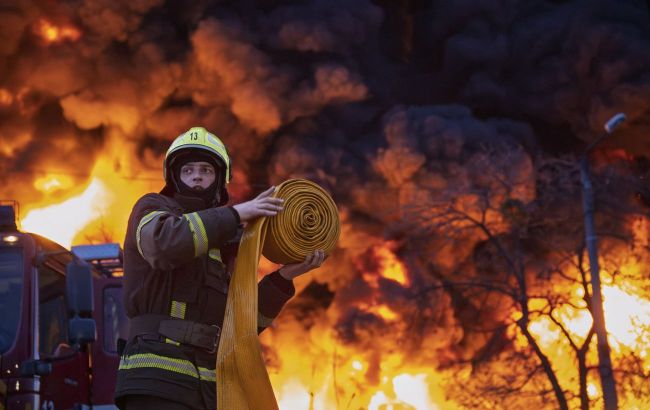 Photo: The Russians carried out two massive attacks in June (Getty Images)
In June 2026, Russia significantly reduced the frequency of large-scale missile and drone strikes against Ukraine, according to the Institute for the Study of War.
Analysts note that in previous months, Russian forces demonstrated the ability to launch strikes using hundreds of drones and missiles regularly.
However, in June, the number of such attacks dropped sharply, although the exact reasons for this remain unknown at this time.
Strategy change: January to June
As the ISW notes, starting in mid-January 2026, the Russian army significantly intensified its campaign of massive airstrikes. The pattern of deploying over 300 air assets per attack was as follows:
- January (second half) - 3 large-scale attacks
- February - 6 massive strikes
- March - 4 massive strikes
- April - 5 massive strikes
- May - 6 massive strikes.
Thus, from January through May, Russia typically carried out one to three major strikes in one week, after which it shifted to significantly less intense operations for one or two weeks.
However, in June, this pattern underwent significant changes. Over the course of the entire month, Russia carried out two attacks, during which over 300 airstrike assets were deployed. These attacks took place on June 2 and 15.
What lull might mean: two scenarios
ISW experts emphasize that there is currently no definitive explanation for this reduction, but they highlight two main hypotheses:
- Building up an arsenal for a future strike. One possible reason could be Russia’s deliberate stockpiling of drones for even more intense waves of strikes in the future. The Kremlin may be biding its time, waiting for the most opportune moment to wear down Ukraine’s air defense system further.
Despite the lull in June, Russia resumed large-scale attacks as early as the beginning of July. On the night of July 2, Russians carried out a massive combined attack on Kyiv, launching a large number of missiles and strike drones, including new jet-powered drones that were actively deployed.
- Modernization and changes in production processes. Another explanation may lie in the restructuring of Russia’s industrial complex. In particular, Moscow may be attempting to decentralize the production of Shahed strike drones or to reorient production capacity toward more complex and expensive models, for example, drones with jet engines (which, notably, were used during the attack on Kyiv on the night of July 2), the manufacture of which requires significantly more time and resources.
As a result of the Russian strikes on July 2, a missile struck a residential high-rise building in the Darnytskyi district of Kyiv, causing devastating damage. As of 7 a.m., 30 fatalities have been reported.
The Kyiv Zoo was also damaged by enemy strikes. As a result of the Russian nighttime attack, not only were the administrative and utility buildings of the capital’s zoo endangered, but some animals were also injured.
Due to cleanup efforts following the Russian strikes, certain areas of the zoo were temporarily closed to visitors.
For his part, Ukrainian President Volodymyr Zelenskyy assured that there would be a just response to such a large-scale attack on civilian infrastructure.