Russia recruits Europeans with cash and trips for sabotage missions - Politico

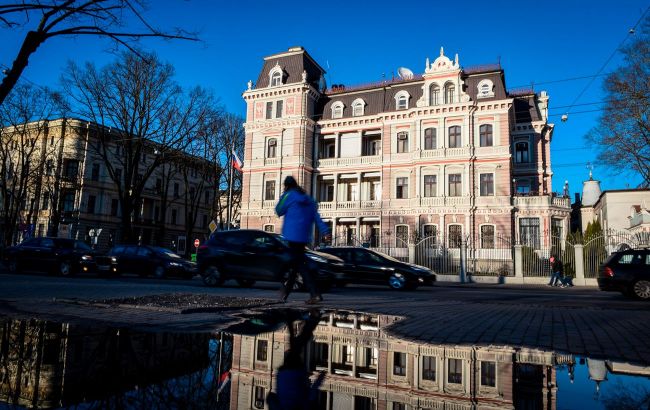 Politico revealed how Russia recruits Europeans for sabotage (photo: Getty Images)
Under the guise of paid nature trips, European citizens are lured into training camps in the Balkans. There, they are taught to operate drones, handle incendiary devices, and are prepared for destabilization operations, Politico reports.
The recruitment scheme usually begins with an ordinary meeting between Russian recruiters and Europeans.
Russian agents offer residents of Europe "easy money" — a two-week trip with elements of outdoor recreation, for which they are paid from 300 to 500 dollars.
After agreeing, the participants-tourists receive further instructions from coordinators in Moscow.
Later, the volunteers end up in training camps in Bosnia and Serbia. There, participants are taught to operate drones, handle incendiary devices, and use tactics of countering police during protests. But this is only part of a coordinated network for preparing operatives for destabilization actions in France and Germany.
Investigations in Moldova related to recruitment attempts linked to Russia are taking place against the backdrop of warnings from European countries about hybrid warfare that Moscow is waging against their political stability.
After the start of the full-scale invasion of Ukraine in 2022 and the expulsion of Russian diplomats from a number of European capitals, the Kremlin began to more actively use intermediaries and unofficial operatives.
Currently, Moldovan prosecutors are investigating cases of more than 80 individuals suspected of organizing mass unrest, with 20 of them already charged.
As stated by Moldova's Minister of Internal Affairs Daniela Misail-Nichitin, this mainly concerns Russian-speaking youth who were recruited, transported to special camps, and trained in tactics, including breaking through police cordons.
Training and camps
One of the training sessions of Russian special services took place just before the autumn presidential elections of 2024, in which pro-European Moldovan President Maia Sandu was re-elected during a campaign overshadowed by Russian interference. According to court transcripts, participants stated that they were told: if Sandu wins the election, "there would be war in the country, just like in Ukraine."
The instructors were part of an international network linked to the Russian mercenary group Wagner, according to Moldovan intelligence services.
After that, participants were sent to one of the cities in Bosnia and Herzegovina for a practical task: documenting the locations of administrative and government buildings and scouting potential drone launch sites.
One of those recruited by Russia — a 22-year-old native of Transnistria — traveled in 2024 to Düsseldorf for a European Championship football match between Slovakia and Ukraine, where he was asked to wave a Ukrainian flag.
He explained that he refused to do so, but during the game a Ukrainian flag with the inscription "Give us elections back" was displayed.
The Kremlin rushed to refer to this flag as a reason why Ukraine should hold elections to replace President of Ukraine Volodymyr Zelenskyy.
Moldova, geographically located between Romania and Ukraine, remains vulnerable due to its strategic position. Transnistria, effectively controlled by pro-Russian forces since the early 1990s, continues to be a factor of instability in the region.
In recent years, as the media notes, the country has become one of the key directions of Russia's hybrid influence on Europe. One document that Moldovan authorities submitted to the European Union after parliamentary elections states that certain members of the clergy received instructions to systematically spread disinformation, not only during sermons.
Russia poses a serious threat to the security of the entire NATO
Swedish intelligence had earlier warned that Russia is the main threat to the entire NATO. Moreover, Moscow's increasingly risky behavior could provoke a dangerous escalation.
The annual report of Swedish intelligence provided examples of hostile actions by Russia in the region, including the Baltic Sea. Among such actions are airspace violations, sabotage, and cyber operations.