Russia proposes forcibly seizing citizens’ bank savings to fund war

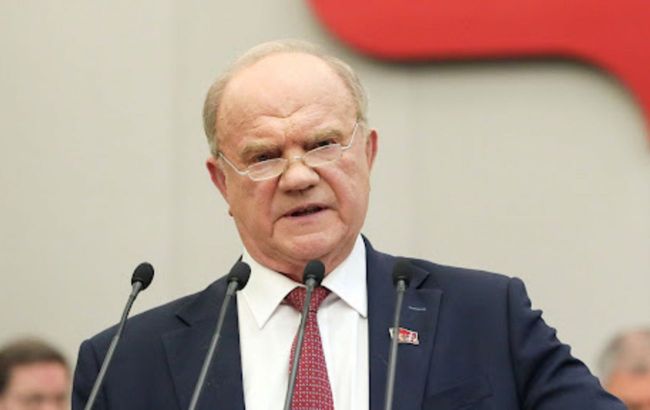 Photo: Head of the Communist Party of Russia Gennady Zyuganov (Russian State Duma)
In Russia, discussions at the highest level have begun about the need for forced seizure of money from the population for the needs of the army, according to The Washington Post.
Proposal for confiscation of accounts
Due to the rapidly growing federal budget deficit and the depletion of the sovereign wealth fund, Russian authorities are feverishly seeking new sources to finance the war machine.
Concern in business circles has intensified significantly after the head of the Communist Party of Russia, Gennady Zyuganov, during a speech in parliament, openly called on the authorities to tap private capital.
The politician demands the mobilisation of about 130 trillion rubles currently held in the bank accounts of ordinary citizens and enterprises.
"That money isn’t being invested in production or anything else — not even in victory. This problem can be solved quickly. If I were the president, I’d do it with a single decree. In wartime, he has the right to do so — he is the supreme commander in chief," Zyuganov stated.
In parallel with these radical calls, the Russian Ministry of Finance is already preparing a legislative framework that would potentially allow the government to gain direct access to $40 billion in Russian pension savings managed by private funds.
Reasons for the financial collapse
The panic in Russian political and financial circles is provoked by several factors at once. By the end of May, Russia's budget deficit had reached 6 trillion rubles (about $83 billion), more than double last year's figure. The situation was significantly worsened by the drop in global prices for Russian oil to $50 per barrel.
At the same time, the most powerful blow to the Russian economy was dealt by the intensive campaign of Ukrainian drones. Massive attacks on oil refineries led to a 25% collapse in gasoline production in Russia within just one week.
In his closed letter to the Russian dictator, Igor Sechin, head of the largest oil company, Rosneft, described the scale of damage to the oil refining infrastructure as unprecedented.
The Kremlin's attempts to find new sources of funding are linked to the fact that the Russian economy is currently at a dead end, and war financing is occurring exclusively through the depletion of internal resources and the destruction of the civilian sector, as previously noted by the Office of the President of Ukraine.
Due to the war it started, Russia is rapidly increasing its state debt, which destroys the main macroeconomic advantage that dictator Vladimir Putin had boasted about for years. According to preliminary estimates, Moscow's military spending in 2026 could exceed planned figures by 4-5 trillion rubles, which is almost 40% higher than the government's initial calculations.
The situation is complicated by the fact that, against the backdrop of regular Ukrainian drone strikes on military, fuel, and industrial infrastructure, the growth rate of the Russian economy continues to slow sharply, forcing the Kremlin to increase domestic borrowing and seek ways to confiscate private capital.