Putin's economic shield weakens as war costs catch up with Russia — Bloomberg

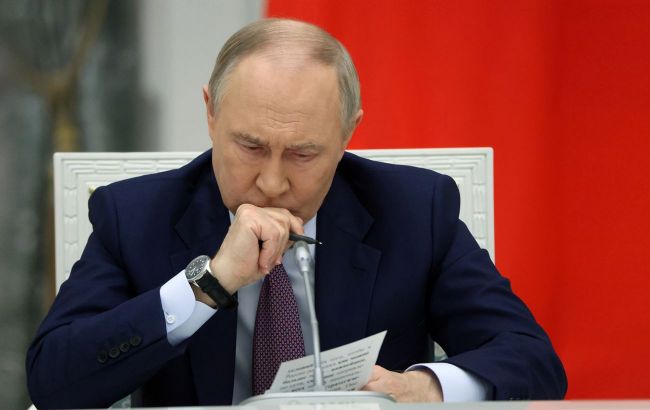 Photo: Vladimir Putin (Getty Images)
Russia is rapidly increasing its national debt due to the rising costs of the war against Ukraine. This threatens one of the main strengths of the Russian economy, which Kremlin leader Vladimir Putin has boasted about for years, according to Bloomberg.
The issue at hand is the low level of public debt. Putin has repeatedly stated that Russia has one of the lowest public debt ratios among G20 countries, and this was considered a key strength of the Russian economy.
However, as the agency notes, the war against Ukraine is increasingly forcing the Kremlin to live on credit.
Russia to spend 15% of its GDP on interest alone
According to Bloomberg’s calculations, over the next ten years, Russia will spend at least 15% of its GDP solely on interest payments on its public debt.
This amount is roughly equal to the country’s current total debt.
Military spending growing faster than planned
Russia’s domestic borrowing is expected to increase again this year, as the Kremlin’s war machine requires additional funding.
Preliminary estimates indicate that military spending in 2026 could be 4–5 trillion rubles higher than planned. This is nearly 40% more than the government’s initial projections.
Budget deficit has already exceeded target
Russia’s 2026 state budget called for raising slightly more than 4 trillion rubles through domestic borrowing.
However, in just the first five months of the year, the budget deficit has already risen to 6 trillion rubles, or 2.6% of GDP. This is approximately 60% higher than the target set for the entire year.
In addition, Russia has already reached its established public debt ceiling.
Russia will have to borrow even more
According to sources, the Russian government will have to raise another 2–3 trillion rubles through new borrowing.
At the same time, the cost of servicing Russia’s debt has doubled since the start of the full-scale war against Ukraine.
In 2026, Russia plans to spend nearly 4 trillion rubles on debt servicing (about 9% of the federal budget).
Russian economy and fuel crisis
The Russian economy continues to slow down amid the protracted war against Ukraine and regular strikes by Ukrainian drones on Russia’s military, fuel, and industrial infrastructure.
In addition, the fuel shortage in Russia is worsening; according to media reports, it has already affected 70 regions of the country.
At some gas stations, gasoline is dispensed only into a vehicle’s fuel tank, and station attendants refuse to fill jerry cans.
According to media reports, due to the acute gasoline shortage, Russia will begin importing automotive fuel from Asia as early as this month.