Russia preparing space weapons to attack Starlink, NATO intel warns

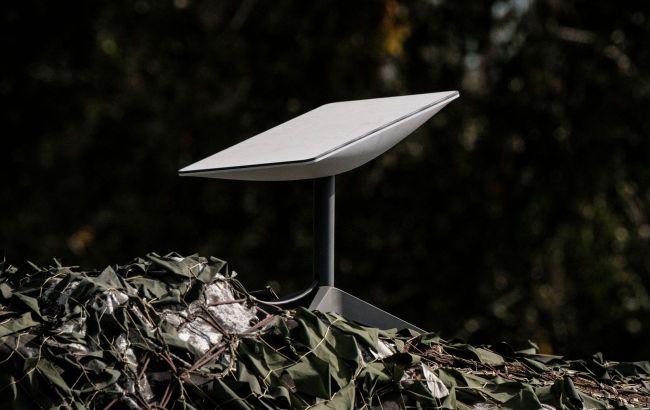 Illustrative photo: Russia is preparing space weapons to attack Starlink (GettyImages)
Russia is developing new anti-satellite weapons aimed at the Starlink system, which plays an important role in providing communications for Ukraine on the battlefield, according to NATO intelligence services.
Intelligence reports that this involves so-called area-effect weapons, which involve placing hundreds of thousands of small, high-density projectiles in orbit. They can simultaneously disable several Starlink satellites, but pose a risk of widespread collateral damage to other space systems.
Analysts warn that the use of such weapons could cause uncontrolled chaos in space, threatening not only Western countries but also Russia itself and its allies, including China. This may deter Moscow from actually using or deploying the system.
Experimental system
The intelligence reports do not specify when Russia will be able to deploy such weapons, nor whether they have been tested.
However, one official notes that the system is in an active phase of development, and the timing of its readiness remains classified.
The projectiles will be several millimeters in size, which will make them difficult to detect by ground-based and orbital surveillance systems. This, in turn, may make it difficult to prove responsibility for a possible attack.
"If satellites start winking out with damage, I guess you could put two and two together," says Clayton Swope, a space security and weapons expert at the Center for Strategic and International Studies.
Extent of damage
"Most damage would probably be done to the solar panels because they’re probably the most fragile part" of satellites, Swope says. "That’d be enough, though, to damage a satellite and probably bring it offline".
Analysts do not rule out that the very fact of developing such weapons may be part of a strategy of intimidation, without their actual use.
Analysts warn that after such an attack, debris and small fragments will eventually return to Earth, posing a threat to other orbital systems.
Starlink satellites are in orbit about 550 kilometers above the planet's surface. At the same time, the Chinese space station Tiangong and the International Space Station operate in lower orbits, so, according to Swope, both objects are in a zone of potential risk.
He also notes that the level of space chaos that such weapons can cause allows Moscow to put pressure on its opponents even without actually using them.
Starlink importance on frontlines
In February, information emerged that the US had raised the issue of possibly disconnecting Ukraine from the Starlink service.
After that, the European Commission began to explore options for supporting Ukraine in the case of restricted access to satellite internet.
In August, the United States approved funding for Starlink services for Ukraine: the State Department approved the sale of satellite communications and equipment worth approximately $150 million.
At the same time, in recent months, there have been interruptions in Starlink's operation on the front lines. In particular, in September, communication problems were observed practically along the entire line of combat engagement.