Russia may revive Cold War-era underwater missile program

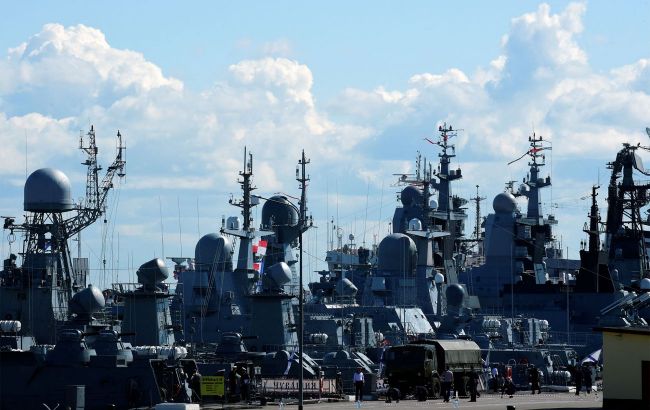 Russia may be preparing to deploy ballistic missiles underwater (photo: Getty Images)
Russia is capable of placing ballistic missiles in special capsules on the seabed. Such a method would allow the Kremlin to significantly reduce spending on building expensive submarines, The Maritime Executive reports.
NATO intelligence has drawn attention to the movement of the vessel Zvezdochka. It is one of four ships operated by Russia's secretive Main Directorate for Deep Sea Research (GUGI), based in the closed city of Severodvinsk.
The vessel is adapted for working with experimental weapons. It was previously linked to the Poseidon nuclear-powered torpedo, and now new data has emerged. Experts suggest that Zvezdochka may be involved in the Scythian program — seabed-based ballistic missiles.
German expert Helge Adrians sees a major danger in this technology, as such missiles are almost impossible to neutralize. They remain motionless on the seabed and are difficult to detect using sonar systems.
The main advantage is financial. There is no need to maintain huge crews or build submarines. There is also no need to spend money on submarine fuel.
Echoes of American developments from the 1960s
The idea of such a missile is not new. Back in the 1960s, General Dynamics developed the Orca project. It was a capsule containing a missile inside, activated by a sonar signal. The capsule was supposed to surface before launch.
The United States successfully tested the system, but the military abandoned it. The Pentagon chose an expensive but reliable path. The United States built a submarine fleet worth 125 billion dollars.
Russia became interested in these developments in the 1990s, and now the project is back on the agenda.
Why the Kremlin remembered Scythian now
The article notes that the war in Ukraine is draining Russia's budget. The invasion is already in its fifth year, while military spending has reached a historic maximum. At the same time, oil revenues remain unstable due to sanctions.
Experts believe that deploying Scythian systems could become an asymmetric response to Western technologies.
What else Russia has created for their military industry
Russians developed the ZAK-30 Citadel anti-aircraft system to protect their oil refineries from Ukrainian drones. It is claimed that the system can use airburst munitions filled with shrapnel. However, whether this system is truly capable of stopping long-range strikes remains a major question.
And things are not going smoothly for Russian forces with Oreshnik missile either. It turned out that during the May 24 attack, Russians wanted to launch two missiles. However, one of them fell in the occupied Donetsk region.