Moscow wants to shield refineries with new Citadel system — but there’s a catch

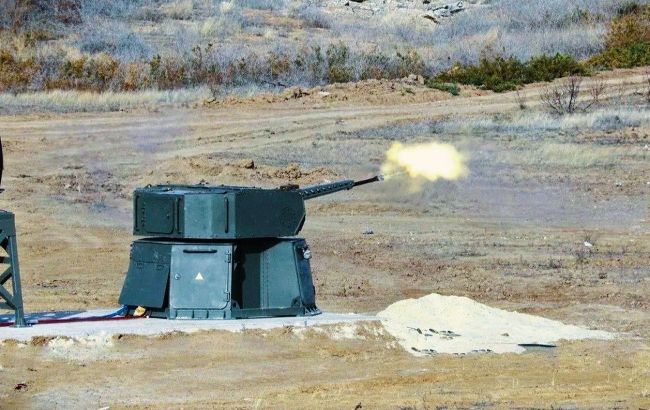 Photo: Russia wants to protect its oil refineries from Ukrainian drones (Russian media)
Russia has developed the ZAK-30 Citadel anti-aircraft system to protect its oil refineries from Ukrainian drones. But whether the system can actually stop long-range strikes remains a major question, according to Defense Express.
What is the Citadel
The new system was developed by Rostec. It is designed to protect stationary facilities from drones, including both quadcopters and aircraft-type UAVs.
The system is equipped with a 30-mm cannon mounted in a stationary turret. It is claimed to be capable of using programmable airburst ammunition filled with shrapnel. The process from target detection to destruction is said to be largely automated.
Radar and electro-optical stations are intended for targeting. The optical channel operates in both visible and infrared spectrums.
However, available photos show none of these stations mounted directly on the installation itself. This suggests that targeting data likely comes from external systems or from a broader air defense network.
Defense industry researcher Andrii Tarasenko said the system’s effective range is 1.2 km. At the same time, the cost of one unit is estimated at around 600 million rubles, or between €3.48 million and €7.21 million depending on exchange rates.
According to his estimates, protecting a single oil refinery would require between six and ten such systems — costing between 3.48 and 6 billion rubles in total.
Defense Express compares the Citadel to Germany’s Skynex anti-aircraft systems currently used in Ukraine, which are capable of shooting down not only drones but also cruise missiles.
Conceptually, the systems are similar. But there is one major difference: on Skynex, radar and electro-optical stations are integrated directly into the platform, while on the Citadel they are not. This raises questions about the accuracy and autonomy of the Russian system.
Weak points
Besides the targeting issue, there is another major problem — ammunition. Russia first showcased programmable shells for the system at an arms exhibition in Saudi Arabia in early 2026. However, no information has emerged about serial production.
Without such ammunition, the system would have to use standard 30-mm shells without airburst capability. The lack of this feature is considered one of the key weaknesses of the Pantsir-S1 system when fighting drones.
The Citadel could potentially be more effective than Pantsir against UAVs. But to make a real impact, Russia would need to order and manufacture the systems in large quantities. A handful of units would not change the situation.
Defense Express also notes that the real performance of the new anti-aircraft system can only be evaluated after practical use — and it cannot be ruled out that this is yet another unrealized Russian defense project.
Meanwhile, circular defenses are being built around Odesa, with Ukrainian military officials revealing details of the construction. The decision is linked to growing threats from Russia and the need for preventive measures in case of a real escalation.
As RBC-Ukraine previously reported, Russia continues threatening systematic strikes on Ukrainian infrastructure amid ongoing bombardments and new statements from the Kremlin.