Russia may have only one Oreshnik missile left, ISW reports

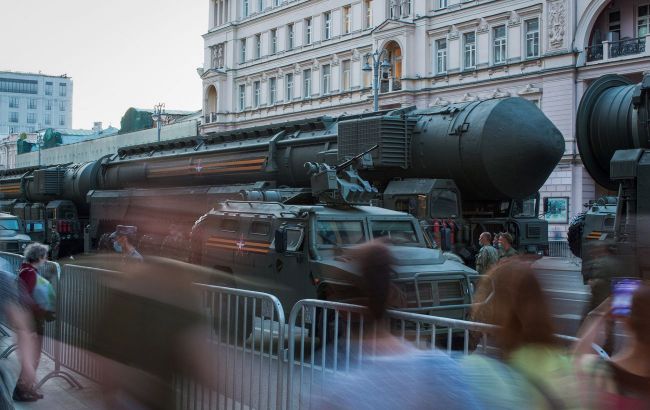 Illustrative photo: How many Oreshnik missiles does Russia have left? (Getty Images)
Russia has nearly exhausted its stockpile of Oreshnik missiles, reports the Institute for the Study of War.
How many Oreshnik missiles does Russia have left?
According to analysts, the Ukrainian private company Dallas Analytics reported that after the first Oreshnik missile strike on Dnipro in November 2024, Russian president Vladimir Putin ordered the accelerated production of four more such missiles.
According to the company, Russia has since used three of the four missiles produced in 2026:
- One was launched in the Lviv region on the night of January 9;
- Two more were used during attacks on the Bila Tserkva area in the Kyiv region;
- One of the missiles reportedly failed to reach its target and crashed in the temporarily occupied territory of the Donetsk region on the night of May 24.
Dallas Analytics believes that after these launches, Russia may have only one operational Oreshnik missile remaining from the original contract.
Russia sacrificed quality to meet deadlines
According to the company, a source in the Russian Ministry of Defense said that facilities producing the Oreshnik allegedly bypassed quality-control procedures to meet deadlines set by the Kremlin.
Dallas Analytics also obtained Russian procurement documents from March 2025. The documents indicate that problems with the Soviet-era GU-503 aviation gyroscope may have negatively affected the missile's guidance system.
As a result, the missile could reportedly deviate from its intended target by dozens of kilometers.
ISW analysts note that despite shrinking stockpiles, Russia will likely attempt to continue Oreshnik production.
Earlier, we reported that Oreshnik missiles may deviate from their targets by dozens of kilometers. These findings were also linked to problems in their guidance systems.
The Institute for the Study of War previously reported that threats of new Oreshnik strikes may be part of the Kremlin's information pressure campaign.