Russia cuts civilian spending by a third as war costs soar

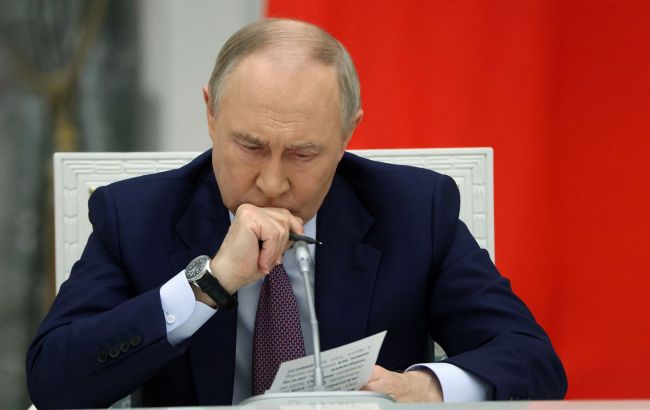 Russian leader Vladimir Putin (photo: Getty Images)
The Russian government has introduced strict limits on budget spending amid a growing deficit and a shortage of resources to finance the war against Ukraine, reports The Moscow Times.
What the agencies were told
State agencies have been ordered to postpone all non-essential expenditures and to prepare for a 15% staff reduction. According to Bloomberg sources, the austerity measures were imposed after Finance Minister Anton Siluanov appealed to Prime Minister Mikhail Mishustin, warning that the budget might lack sufficient funds to make all payments on time.
At that point, the federal treasury's negative balance had already reached 5.5 trillion roubles, and the government was facing a liquidity crunch. Despite the difficulties, authorities do not consider the budget situation critical - Bloomberg sources say that Russia, according to official calculations, could finance the continuation of the war for several more years.
How the budget hole grew
When drafting the 2026 budget, the Finance Ministry planned to reduce the previous year's deficit from 5.7 trillion roubles to 3.7 trillion roubles by raising VAT and taxes on small businesses. However, by the end of the first quarter, the deficit had already exceeded the annual target, reaching 4.5 trillion roubles. Although the ministry attributed this to frontloading of expenditures, the deficit continued to widen despite unplanned commodity revenues from the war in Iran. By the end of the second quarter, it had reached 5.7 trillion roubles, and by early August, 6.5 trillion.
According to the Electronic Budget system, as of 24 August, the current budget deficit had already reached 8.654 trillion roubles - a figure that does not yet account for August tax revenues, which are due at the end of the month and will slightly reduce the hole.
What to expect by year-end
According to Bloomberg sources, the deficit is unlikely to narrow by the end of the year - on the contrary, it is expected to continue growing. The government's latest estimates put it at 3.2–3.8% of GDP, matching the record set during the pandemic year. In monetary terms, this amounts to roughly 9 trillion roubles - even exceeding the Central Bank's most pessimistic forecast of 8.2 trillion.
Sources say the spending cuts helped curb the deficit's growth - according to internal Finance Ministry calculations, it could have reached 9 trillion roubles as early as the end of June.
In August, European intelligence assessed how much longer Putin could finance the war; despite economic woes, rising global oil prices provided additional revenues to the Russian budget and delayed the moment of more severe financial pressure.
Notwithstanding this reprieve, Ukraine continues to edge Russia closer to economic collapse. In recent months, Ukrainian drones have knocked out up to 40% of the country's refining capacity, leaving roughly a third of Russians facing fuel shortages.
As a result of the effective strikes on refineries and the worsening fuel crisis, Russia has even begun resorting to "grey" schemes for processing petroleum products.