Putin gets more time to fund the war as Russia's oil revenues surge

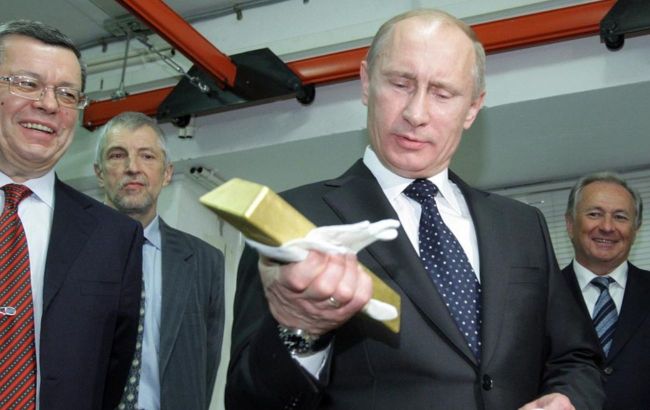 Photo: Russian dictator Vladimir Putin (Getty Images)
Russia’s economic problems have not yet forced the Kremlin to cut spending on its war against Ukraine. On the contrary, rising global oil prices have provided Russia’s budget with additional revenue and delayed the point at which Moscow could face more serious financial pressure, according to Fox News.
A Fox News source believes that thanks to additional oil revenues, dictator Vladimir Putin will be able to continue his military campaign against Ukraine at least until next spring or for "another season."
Oil brings Russia billions in additional revenue
At the beginning of the year, the price of Russia’s Urals crude fell to $40 per barrel or lower. However, in the second quarter, it rose to $82 per barrel — about one and a half times higher than during the same period last year.
According to data cited in the report, Russia’s economy received about $30 billion in additional export revenue in April-June. Meanwhile, in July, Russian budget revenues from the oil and gas sector reached 934 billion rubles, the highest level in more than a year.
Higher oil prices have allowed the Kremlin to reduce the budget deficit and postpone the point at which economic problems could force Putin to make a more difficult choice over continuing the war.
“It doesn’t solve the fundamental economic problems in Russia,” a European intelligence official said. At the same time, from a budgetary perspective, Putin is currently “not under pressure,” the official added.
Russia’s budget deficit already exceeds the annual target
Despite the additional oil revenues, Russia’s budget remains in a difficult position.
According to Russia’s Finance Ministry, from January through July, the federal budget deficit reached 6.5 trillion rubles. That is 70% more than the amount planned for the entire year of 2026.
According to Sberbank’s forecast, Russia’s budget deficit could rise to 7 trillion rubles by the end of the year.
Thus, high oil prices have not eliminated Russia’s economic problems but have only given the Kremlin additional time to finance them.
A much stronger economic shock is needed to stop Russia
Elina Rybakova, a senior fellow at the Peterson Institute for International Economics, also believes that the current economic situation is unlikely to force Putin to end the war.
According to her, economic pressure would have to become significantly stronger. As an example, Rybakova cited a scenario in which oil prices remained at around $35-$40 per barrel for a year.
At the same time, such a scenario currently appears unlikely because of the war involving the United States, Israel and Iran, which is supporting higher oil prices.
Thus, the current increase in oil revenues does not mean that Russia’s economy has overcome its problems. However, it gives the Kremlin an opportunity to sustain high military spending for longer and delays the point at which financial difficulties could become critical to continuing the war.
Context
Despite the delay in a potential full-scale collapse of Russia’s economy, Ukraine’s Defense Forces are making every effort to bring it closer. In recent months, Ukrainian drone strikes have knocked out up to 40% of Russia’s oil refining capacity. Against this backdrop, about one-third of the country’s residents have faced fuel shortages.
In addition, due to effective Ukrainian strikes on Russian refineries and the worsening fuel crisis, Russia has begun resorting to “gray” schemes to process petroleum products.