Russia creates fake Wikipedia-style sites to influence AI and users - Bloomberg

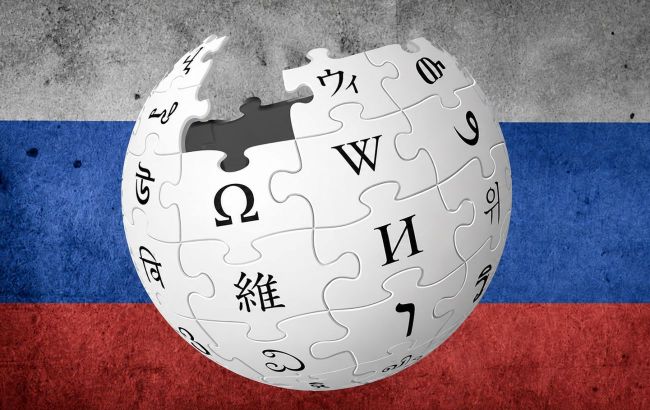 Photo: Russia seeks to promote its narratives through Wikipedia clones (Getty Images)
The Kremlin developed a strategy to deceive artificial intelligence systems and search engines. The plan was to use a network of fake websites and Wikipedia clones to manipulate algorithms into serving Russian propaganda to users, reports Bloomberg.
Russia prepares a new phase of information warfare
Bloomberg journalists obtained internal documents from the Russian company Social Design Agency (SDA), which is under sanctions from the United States, the United Kingdom, and the European Union for its involvement in information operations benefiting the Kremlin.
The 73 documents include project proposals, internal materials, and screenshots of internal chats dating from May 2023 to April 2026.
The documents show that Russian influence operators were working on a project called Project 2026. Its goal was not only to spread disinformation on social media but also to create its own information ecosystem to influence search results and large AI language models.
Wikipedia clone websites
One of the project's key initiatives was the creation of Wikipedia clone websites.
A search engine-optimized resource was planned for Armenia. Popular pages on the site were intended to feature pro-Russian narratives and false information about politicians.
According to Bloomberg, journalists identified three such resources created in early 2026. Their hosting provider later suspended their operations.
Another project targeted Germany. One document states that about 200,000 web pages were created for it. The project's authors planned to update content for search engines every month and train six artificial intelligence platforms using that content.
According to the plan, the network of websites was meant to help promote preferred content in search results and influence the data used by AI language models.
Bloomberg also highlights the Ruwiki project, a Russian alternative to Wikipedia launched in 2023 using Wikipedia content as its foundation. According to the media, some articles were edited to align with the Kremlin's position, particularly on the war against Ukraine.
The article notes that most of the documents do not contain SDA logos. However, European officials and disinformation researchers told Bloomberg that they believe the documents are authentic based on their content and formatting style.
Bloomberg also independently verified the existence of 42 websites shown in screenshots from the operation's content management system. Nearly all of them were hosted on the same Russian IP address.
Among them were the websites spyurk.cyou, sevan.info, and khachkar.info, which contained pages about Armenia copied from the Russian-language Wikipedia.
How this could affect AI
Katerina Sedova, a senior fellow at the Atlantic Council's Eurasia Center, explained that the tactic is designed to flood the information space with large amounts of interconnected content.
"Their approach is to try to break search engines by flooding the zone with content that cross-references their content or their narratives," she said.
"This will be their indirect way of breaking into popular chatbots and search engines," Sedova added.
Fake think tanks
The documents also contain plans to create pseudo-think tanks for distributing content favorable to the Kremlin.
One such resource, the "World Center for Strategic Studies," published rewritten materials from reputable research institutions while altering their conclusions.
For example, one article described Europe as being in the midst of a major political and economic crisis, even though the original study contained no such conclusions.
How campaign effectiveness was measured
Internal materials also show that SDA evaluated the effectiveness of its disinformation campaigns.
Among the examples was a false story claiming that the mother of Ukrainian President Volodymyr Zelenskyy had purchased two apartments in Dubai's Burj Khalifa.
According to the campaign's authors, the story generated about 86 million views. Part of that reach came from network participants who spread it on social media.
The materials also analyzed false claims that Armenian Prime Minister Nikol Pashinyan had purchased a villa in France.
Russian propaganda campaigns using AI
Experts and Ukrainian intelligence officials have repeatedly warned about the expansion of Russian information warfare tools.
RBC-Ukraine reported, citing former head of Ukraine's military and foreign intelligence services Valerii Kondratiuk, that Russia had begun using artificial intelligence extensively in information attacks. This includes generating texts in multiple languages, creating synthetic videos and audio recordings, and using networks of accounts to spread propaganda messages.
The G7 countries previously accused SDA and RT of disinformation and covert influence campaigns in various countries. The G7 stated that such structures exploit social and political issues to polarize societies, undermine trust in democratic institutions, and advance Kremlin interests.
The US, the UK, and the EU have also imposed sanctions on SDA for its involvement in influence operations and the spread of disinformation.