Russia attacks Ukraine's key Donetsk stronghold zone - ISW

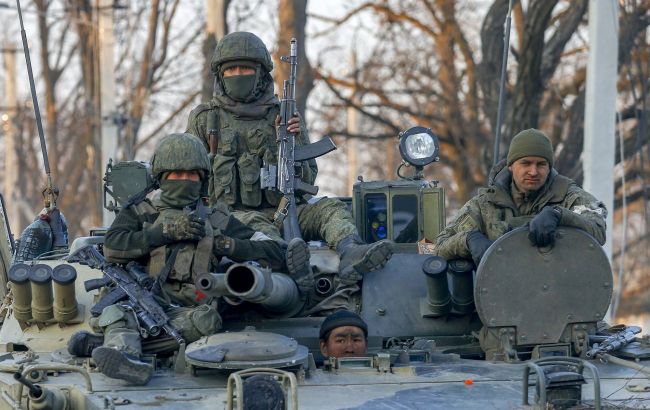 Photo: Russian forces begin offensive on Ukrainian Fortress Belt in Donetsk (Getty Images)
Russian troops have likely launched a spring-summer offensive against Ukraine's Fortress Belt in Donetsk. The main pressure is focused on the Lyman direction, which opens the way to Sloviansk and Kramatorsk, according to the Institute for the Study of War (ISW).
Analysts note that the Russian troops have stepped up attacks in eastern Ukraine, likely beginning a large-scale spring-summer campaign against the main Ukrainian defensive line in Donetsk, known as the Fortress Belt.
According to ISW, the heaviest fighting is currently concentrated on the Lyman direction, where Russian forces are trying to create conditions for further advances toward Sloviansk.
Ukrainian military reports indicate that on March 19, Russian units launched a battalion-level assault involving over 500 soldiers, dozens of armored vehicles, and a large number of light vehicles, including motorcycles and buggies.
The attack came simultaneously from several directions, signaling a change in tactics — from moving in columns to dispersed strikes to complicate the work of Ukrainian drones.
Lyman is a key stronghold on the way to Sloviansk and Kramatorsk. Increasing pressure there is intended to pave the way for future attacks from multiple flanks, including from the east and southeast.
Meanwhile, Russian troops are preparing to intensify operations further south, in the Kramatorsk and Kostyantynivka directions. Observers report redeployment of equipment, more artillery strikes, and the use of drones, including FPV and strike UAVs.
In addition to ground attacks, Russia is increasing air and drone strikes using guided bombs and loitering munitions, aiming to disrupt Ukrainian logistics and weaken defenses ahead of further assaults.
At the same time, Ukrainian forces are inflicting significant losses on the Russians. Estimates suggest that during one recent assault, Russian units lost most of their personnel, casting doubt on their ability to sustain such attacks.
Analysts believe that despite the intensified offensive, Russian troops are unlikely to capture the entire Fortress Belt in 2026. However, fighting in Donetsk is expected to remain intense, and enemy advances will come with heavy losses.
Spring-summer Russian offensive
Earlier reports indicated that Russian forces have recently increased attacks on specific front-line sectors.
The most notable rise has been on the Zaporizhzhia front, where assault intensity in some areas has exceeded that of one of the most tense zones on the front — the Pokrovsk area.
According to DeepState, Russian command is also regrouping forces and replenishing reserves. Analysts believe these moves may be linked to changing weather and increased vegetation, which could affect battlefield tactics.
Meanwhile, Ukrainian President Volodymyr Zelenskyy stated that the Russian spring offensive has already failed.
He noted that Russian forces currently cannot advance with heavy equipment, relying only on small group infiltrations, while Russia shows no real drive to end the war.
Commander-in-chief of the Ukrainian Armed Forces, Oleksandr Syrskyi, said that the highest intensity of Russian attacks is recorded on the Zaporizhzhia front, near Huliaipole.
In recent days, Russian forces have increased mechanized assaults along the front as part of preparations for the spring-summer offensive.
On March 21, Third Army Corps commander Andriy Biletsky reported that the Russians attacked simultaneously along seven directions on the Lyman front.