Russia as tool of influence, Europe under pressure: Ukraine assesses China's 20-year strategy

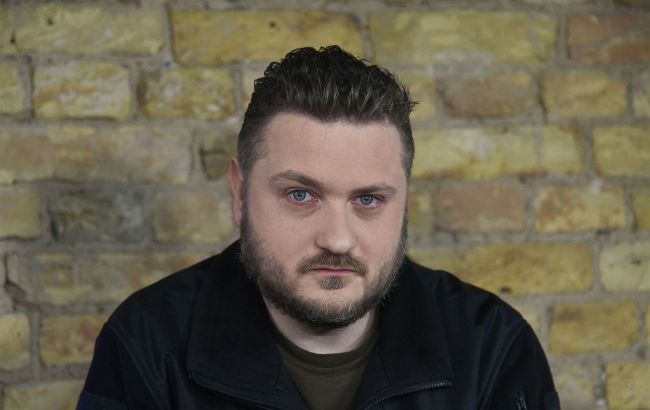 Photo: Andriy Kovalenko, Head of the Center for Countering Disinformation (Getty Images)
China does not see Europe as a single political bloc but as a collection of states with varying strategic importance. Beijing aims to balance its approach between the US and the EU through economic and diplomatic means, avoiding open confrontation, according to Andriy Kovalenko, head of the Center for Countering Disinformation under Ukraine's National Security and Defense Council.
"According to Chinese analysts, Europe is not a unified political entity for Beijing, but a set of different markets and political environments. Europe is a conglomerate of countries with different economic and strategic characteristics," Kovalenko said.
China's approach to the EU
Germany, France, and Italy form Europe's industrial and technological core. China focuses its investments on technology and industrial cooperation, not just infrastructure.
"Germany remains China's key trading partner in Europe," Kovalenko emphasized.
Central and Southeastern European countries are engaged through the "17+1" initiative. It is used as a political influence channel rather than as an economically effective tool.
"This mechanism demonstrates the ability to bypass Brussels' consensus through individual capitals," the center’s head noted.
Northern Europe and the Baltics are seen as challenging regions due to their firm positions on human rights, Taiwan, and security issues. The Lithuanian case from 2021-2023 showed Beijing that the EU is willing to pay an economic price for political positions.
Russia in China's view of Europe
Russia plays the role of a tool. Moscow generates security instability, allowing China to focus on economic influence.
"Russia is not a partner on the level of the EU or the US, but it is a useful factor for strategic pressure," Kovalenko wrote.
After Russia's full-scale invasion of Ukraine, China did not distance itself from Moscow but turned it into a raw material appendage for its strategy. China’s competition with the US for influence in Europe is implemented through trade, investments, infrastructure, and business lobbying.
Following strengthened transatlantic coordination from 2022 to 2024, the EU started talking about "de-risking" rather than "decoupling," which benefits China.
20-year forecast
Europe is expected to remain economically significant but politically fragmented. A potential EU collapse could be advantageous, but Beijing wants the continent to be slow rather than weak, a cautious partner rather than an enemy.
China-Russia cooperation
Commissioner of the President of Ukraine for Sanctions Policy, Vladyslav Vlasiuk, said that most components used in Russian drones and missiles are supplied by China. The share of Chinese-made components has increased since the start of Russia's full-scale invasion.
China is expanding cooperation with Russia, including in the military-industrial sector.
In June, RBC-Ukraine reported that China had become a key supplier for Russia's war machine. There have also been suggestions that Beijing may have transferred lethal weapons.
According to Reuters, Chinese combat engines are being shipped to Russia disguised as industrial refrigeration units.
In September, US President’s Special Envoy for Ukraine Keith Kellogg said that if China stopped supplying Russia, the war in Ukraine could end as early as the next day.