Romania unveils AI-powered cruise missile that’s dramatically cheaper than rivals

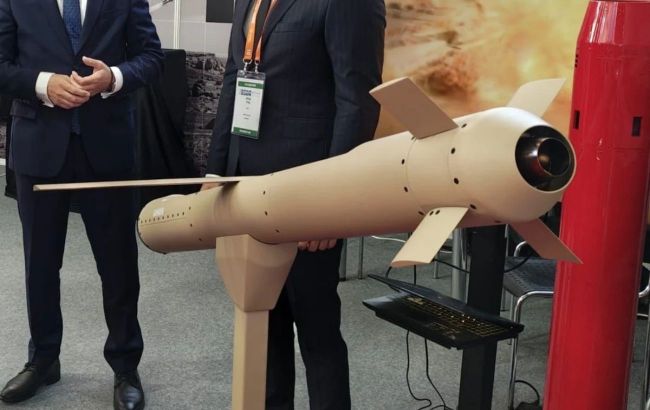 Photo: Romanian Sahara rocket (Oves Enterprise)
Romanian company Oves Enterprise has created a low-cost AI-guided cruise missile. Its launch weight is 55 kilograms, according to the Defence Blog.
The project has already attracted the attention of senior Romanian officials, as the Sahara missile, despite its low weight, can carry a warhead weighing up to 10 kilograms. Sahara was designed to destroy high-value targets. It does not require huge logistics or maintenance costs.
Technical characteristics and range of the Sahara missile
The missile is equipped with a modern turbojet engine. It uses about 20 kilograms of fuel during flight. According to Oves Enterprise, the system has an operational range of 200 kilometers, allowing it to strike targets far beyond the front line.
Potential targets include:
- Command posts and communication hubs;
- Logistics centers;
- Ammunition and fuel depots;
- Air defense systems.
The 200-kilometer range covers large parts of the Black Sea region. The company has not yet disclosed deployment scenarios, but the weapon’s potential appears significant.
How Sahara bypasses enemy air defenses
The missile’s main technical advantage is its ability to follow terrain contours. Sahara flies at an altitude of just 50 meters above the ground. It constantly adjusts its trajectory. The missile maneuvers around hills and uses natural obstacles for concealment, minimizing visibility to enemy radars.
A similar principle is used by the well-known and much more expensive Storm Shadow and SCALP missiles. Romanian engineers managed to implement this complex technology in a compact frame. This is a major achievement for the national defense industry.
Artificial intelligence instead of traditional guidance
Oves Enterprise integrated artificial intelligence into the system. The missile does not simply follow coordinates but uses machine learning and computer vision. This allows Sahara to identify targets independently.
The missile can recognize the category of a target, adapt its route during flight, while AI ensures high precision in the final stage of the attack.
This approach changes the understanding of weapons control. The missile becomes smart and less dependent on external signals.
Cheap but effective
The development of the Sahara cost the company about $1.1 million. A team of 25 specialists worked on the project. For comparison, major Western countries spend hundreds of millions on similar research. The price of a single missile will be significantly lower than market analogues.
The developers used an integrated approach. They designed the electronics, engine, and software as a single package. This simplifies production and logistics.
It is currently uncertain whether Sahara has completed flight testing. However, Sahara has already proven that even small companies can create high-tech weapons of the future.
Other news from the European defense industry
We previously reported that amid the EU’s desire to rely less on American weapons, even automotive giant Mercedes-Benz is open to producing weapons. The company is partially ready to switch to a military footing under one condition.
Meanwhile, German company Rheinmetall is strengthening its presence in the Black Sea region and is buying a shipyard in Romania. The arms manufacturer wants to build military ships there.
The EU is also planning to produce its own missiles in order to be independent from the United States. Production is expected to begin in late 2026 or early 2027.