Registry of Russian damages on Lower Danube to be created by Ukraine and other states - Deputy Prime Minister

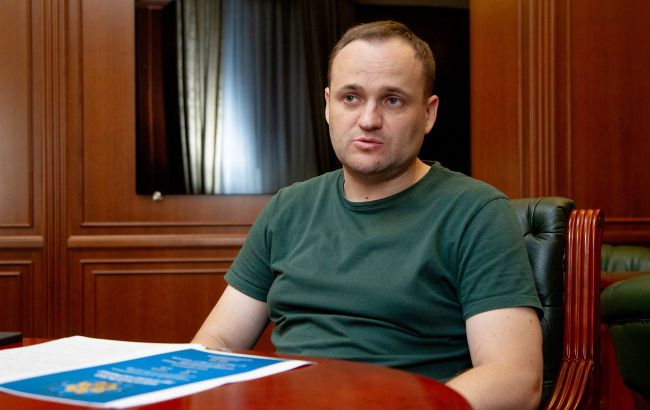 Photo: Ukraine’s Deputy Prime Minister for Reconstruction Oleksii Kuleba (Getty Images)
The Danube Commission has created a Registry of Damages from Russian Aggression on the Lower Danube and recorded violations of the Belgrade Convention, according to Ukraine’s Deputy Prime Minister for Reconstruction, Oleksii Kuleba.
At the organization’s 104th session, the majority of member states supported Ukraine’s initiative to establish a special Registry of damages inflicted by Russia on Ukraine in the Lower Danube.
The Registry will allow for the systematic collection of data on the destruction of ports, damaged vessels, and cargoes, as well as the transfer of this information to the Council of Europe and the EU for further international response.
In addition, the Registry will serve as a basis for shaping international legal decisions on future compensation for damages. In effect, this is about holding Russia accountable step by step — not at the level of statements, but through documents and evidence.
Importantly, this is not only about destroyed infrastructure, damaged vessels, or destroyed cargoes. Russia’s attacks have directly affected international logistics, maritime safety, and freedom of navigation on one of Europe’s key waterways.
Ukraine’s initiative was supported by Austria, Germany, Croatia, Moldova, Romania, and Slovakia, demonstrating shared responsibility for security on the Danube.
It is also important that Russia has already been removed from participation in the Danube Commission. The current decision has become another step toward its further international isolation and the protection of international law principles. For its part, Ukraine says it will continue to document every crime committed by the aggressor so that none of them go unpunished.
Austrian Foreign Minister Alexander Schallenberg stated that Russia’s aggression in Ukraine is the greatest direct threat to security in Europe, making European unity on this issue extremely important.
In turn, German Chancellor Friedrich Merz pledged to protect the Baltic countries from Russian aggression.