Putin's war silences Russia's oligarchs and increases their dependence on Kremlin - BBC

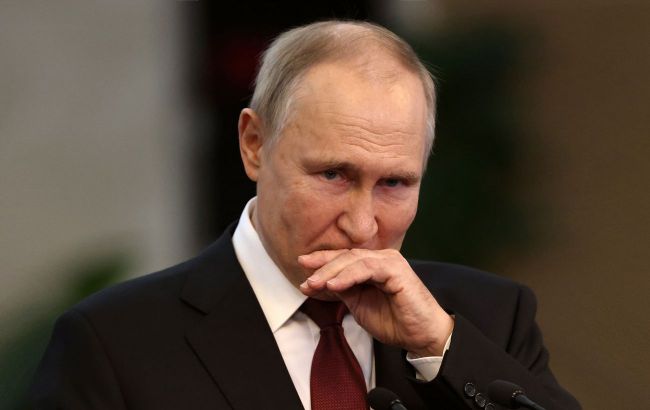 Photo: Russian President Vladimir Putin (Getty Images)
During the full-scale war against Ukraine, the number of billionaires in Russia increased, but they lost political influence. President Vladimir Putin leveraged fear, sanctions, and strict control to compel Russian oligarchs to stay silent and align with the war effort, reports the BBC.
Despite a record number of billionaires during the war with Ukraine, Russian oligarchs have effectively lost independence and political voice.
According to the BBC, over the past 25 years, Putin systematically turned the country's wealthiest individuals into Kremlin-dependent businessmen who dare not publicly challenge the regime.
Journalists note that Western sanctions did not make Russia's ultra-wealthy enemies of Putin. On the contrary, a mix of pressure and selective privileges has turned most of them into silent allies of the government.
A clear example is former banking billionaire Oleg Tinkov. After he called the war against Ukraine "crazy," Kremlin representatives approached his bank's management. They signaled that if Tinkov remained linked to the bank, it would be nationalized.
"I couldn't discuss the price. It was like a hostage — you take what you are offered. I couldn't negotiate," Tinkov told The New York Times.
Within a week, Tinkoff's bank was acquired by an entity linked to Putin. According to Tinkov, the deal was finalized at just 3% of the asset's real value, costing him about $9 billion. The businessman then left Russia.
The BBC emphasizes that today's situation is sharply different from the 1990s, when oligarchs had direct access to power and could influence political decisions. Back then, wealth translated directly into real political leverage.
One famous example is Russia's most powerful oligarch, Boris Berezovsky, who claimed he helped bring Putin to the presidency in 2000. He later admitted it was a mistake.
"I didn't see the future greedy tyrant and usurper in him, the man who would trample freedom and stop Russia's development," Berezovsky wrote in 2012.
Even if Berezovsky overstated his role, other oligarchs did wield influence. However, by the time of the full-scale invasion of Ukraine, that era had ended.
On February 24, 2022, Putin gathered the country's wealthiest individuals in the Kremlin. According to the BBC, the billionaires appeared confused and scared, but they did not dare openly oppose him, even knowing the war would hit their fortunes.
"I hope that in these new conditions, we'll work together just as well and no less effectively," Putin said at the time.
Since then, almost all Russian mega-wealthy have remained silent. Those who publicly opposed the war were forced to leave the country, losing a significant portion of their capital.
According to the BBC, Russian oligarchs play a key role in sustaining the Kremlin's military machine. Most, including 37 businessmen summoned to the Kremlin on the day of the invasion, are under Western sanctions, which effectively prevent them from moving their capital abroad.
"The West did everything possible to ensure that Russian billionaires rallied around the flag," said Alexander Kolyandr, an analyst at the Center for European Policy Analysis (CEPA).
After foreign companies left Russia, a vacuum quickly emerged, allowing Kremlin-aligned businessmen to acquire profitable assets at low prices.
Alexandra Prokopenko of the Carnegie Russia Eurasia Center notes that this created a new "army of influential and active loyalists," whose wealth depends directly on Russia's confrontation with the West.
"Their worst fear is the return of the previous owner," she said.
Russia's economy
The role of Russian oligarchs in the war is increasingly visible amid the country's worsening economic situation.
Earlier reports indicate that the Russian industry is facing its deepest crisis since the late 1990s, with falling sales, shrinking production, and GDP growth nearly stalled.
Bloomberg analysts warned that an overly strong ruble undermines the military economy, eroding both export competitiveness and Russia's attractiveness to investors.
The financial system is sliding into controlled chaos, with banks hiding their ownership, civil servants evading declarations, and entrepreneurs struggling to keep businesses afloat. Meanwhile, Putin fantasized about "low unemployment" and a "technological breakthrough," but the reality starkly contrasts his claims.
This year, the ruble has risen 45% against the dollar, almost returning to pre-invasion levels. Economists warn that further currency strengthening, combined with high interest rates, increases the risk of stagflation.
According to the Washington Post forecasts, Russia's economy will face serious challenges due to the war and new sanctions in 2026.