Putin’s propaganda masks degradation of Russia’s economy - Center for Countering Disinformation

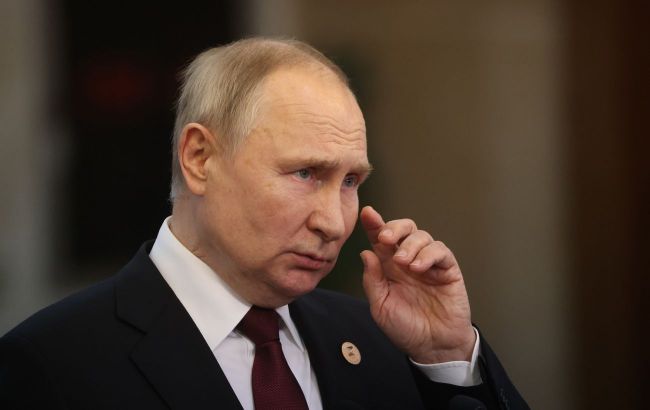 Photo: Vladimir Putin, Russian President (Getty Images)
The Russian President Vladimir Putin fantasized about "low unemployment" and a "technological breakthrough" in Russia. In reality, the situation is the opposite, according to the Center for Countering Disinformation on Telegram.
As noted by the Center for Countering Disinformation, after signing a decree to hold the so-called Year of Unity of the Peoples of Russia in 2026, Putin once again spread propaganda. He claimed "almost full employment" and an "inevitable technological breakthrough."
The Kremlin leader asserts that supposedly 97.8% of Russians are employed. In reality, however, Russia is cutting paid positions at universities, limiting educational opportunities for young people, and effectively forcing people to work in the military sector or at defense industry enterprises.
The term "low unemployment" is used not because of economic growth, but through manipulations of statistics and hidden unemployment. For example, employees at state-owned enterprises are shifted to a four-day workweek. Additionally, figures are influenced by mobilization, the war, and deteriorating conditions in the civilian labor market.
Putin's claims of a "technological breakthrough" and Russia's leadership in artificial intelligence are also far from reality. Despite the grandiose statements, the number of inventions in Russia has dropped to its lowest level in over 20 years. Patent activity has fallen by nearly 40% compared to the pre-war period. Moreover, most of the so-called "innovations" are secondary or borrowed solutions.
Ruble strengthening threatens Russia’s economy
This year, the Russian ruble unexpectedly gained 45% against the dollar, trading at nearly the same level as before Russia’s full-scale invasion of Ukraine.
Economists warn that further ruble appreciation could pose a threat to Russia’s economy. A strong currency, combined with expensive credit, raises the risk of stagflation, reduces competitiveness, worsens investment attractiveness, and limits economic growth, which the Central Bank now forecasts at 0.5–1% compared to 4.3% last year.