Orbán 'sets traps' for his successor to prevent them from governing Hungary

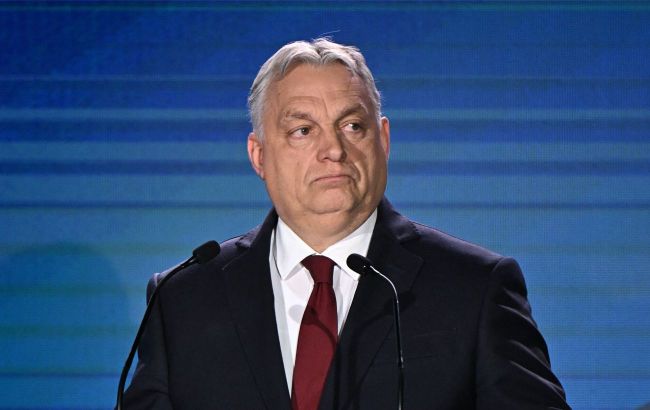 Photo: Viktor Orbán, Prime Minister of Hungary (Getty Images)
"Even if opposition frontrunner Péter Magyar wins Hungary’s election this month, he will face a grueling ordeal in trying to run the country effectively thanks to a complex legal and political minefield laid by Prime Minister Viktor Orbán," the outlet writes.
During his 16 years in power, Orbán has "secured tight control over critical public institutions."
This means that loyalists of the current prime minister will still have decisive powers to obstruct Magyar’s budget plans and overturn legislation through a politicized constitutional court.
Many key aspects of public life, including "cardinal laws" governing the judiciary, media, electoral system, public finances, family policy, and the church, can only be changed if Magyar and the Tisza party secure a two-thirds majority.
"Orbán’s government and the ruling Fidesz party are betting that Tisza — a young party drawing support from across the political spectrum — will falter due to inexperience and won’t be able to rule," Politico writes.
Budget deficit
The first challenge for the new prime minister will be to draft a budget capable of financing his costly campaign promises. For example, increasing public healthcare spending after years of underinvestment.
However, Fidesz has depleted the treasury, reaching 50% of its full 2026 deficit target by February after introducing massive pre-election subsidies to win voter support.
Moreover, Orbán could further complicate matters through the budget council. It is composed of three Fidesz-aligned members recently appointed for terms of 6 to 12 years, who can veto the budget.
Hungarian President Tamás Sulyok, who is close to Fidesz and will remain in office until 2029, could call early elections if the government fails to pass a budget. Both the budget council and the president can only be removed by a two-thirds parliamentary majority.
Similar challenges await Magyar when he attempts to unlock €18 billion in frozen EU funds. In particular, he will need to implement reforms required by Brussels by an August deadline.
Two-thirds majority for changes
The requirement for a two-thirds majority for many reforms becomes the biggest obstacle to any new government’s success.
The introduction of "cardinal laws" covering everything from the judiciary to the media was a key feature of Orbán’s 2011 constitutional reform. It ensures that many core policies will be extremely difficult for a future government to change.
Fidesz has filled important oversight positions with its loyalists, including the chief prosecutor, the ombudsman, and media representatives.
"All of them are truly important and at the moment are captured and may exhibit a potential to block a non-Fidesz government," explained Miklós Ligeti, legal director at Transparency International Hungary.
The Constitutional Court is a clear example of how Orbán could complicate Magyar’s path, as Fidesz has appointed all 15 of its judges. Hungary’s Supreme Court is headed by András Varga, who was appointed by a Fidesz-controlled parliament.
In addition, Orbán’s lawmakers strengthened the veto power of President Tamás Sulyok in December; he was appointed in 2024 for a five-year term.
Orbán in opposition
While in opposition, Orbán could also significantly complicate life for the Tisza party. Zsuzsanna Szelényi, a former Fidesz MP who left the party, said that the current prime minister and his party have extensive experience as opposition fighters.
Szelényi pointed to what happened in 2006, the last national election in Hungary that Fidesz did not win.
Orbán initially conceded defeat, but within a few months, this changed after a leak of a private speech by Socialist leader Ferenc Gyurcsány, which outraged Hungarians.
In the speech, Gyurcsány admitted he had blatantly lied to win the election, denying that he would introduce austerity measures.
"Between 2006 and 2010, Fidesz took politics to the streets and harried the government with highly obstructionist tactics in the parliament," Szelényi told the publication.
She believes Orbán may be tempted to repeat this approach.
Elections in Hungary
Hungary’s election campaign is taking place amid serious scandals and allegations of external influence. In particular, Politico reported that Prime Minister Viktor Orbán is already preparing a plan in case of his defeat.
In Brussels, several scenarios are being discussed in response to a possible renewed Orbán victory in the elections. According to media reports, the EU is considering at least five options that could prevent decision-making from being blocked within the bloc.