EU prepares 5 scenarios if Orbán wins elections - Politico

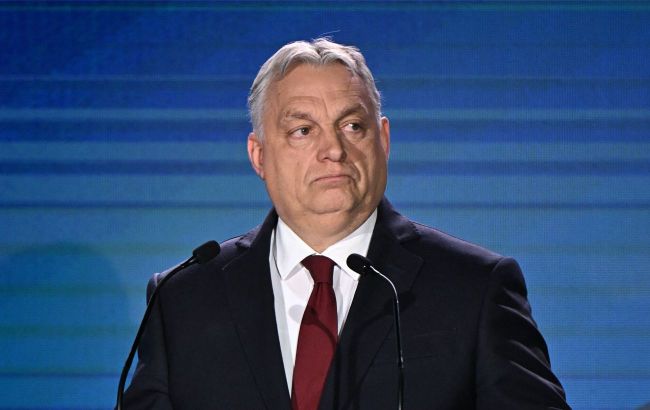 Viktor Orbán (photo: Getty Images)
The EU is discussing several response scenarios in case Hungarian Prime Minister Viktor Orbán wins the upcoming elections. At least five options are being considered to prevent potential blocking of decisions within the bloc, Politico reports.
As Politico writes, in Brussels, there are fears that a new term for Hungarian Prime Minister Viktor Orbán could complicate the adoption of key decisions in the EU, particularly in the areas of foreign policy, the budget, and sanctions.
One European official said that in the event of a victory by the Hungarian prime minister, a real battle will begin to preserve the unity of the bloc. Another diplomat called Orbán a "Trojan horse" that undermines trust within the European Union.
Against this backdrop, the EU is already discussing possible scenarios to contain Budapest after the elections in April.
Among the options are changes to voting rules, limiting or suspending funding for Hungary, as well as tougher steps, including the theoretical possibility of expelling the country from the EU.
Changing voting rules
As Politico writes, one of the most discussed options in the EU is expanding the use of qualified majority voting. Currently, several important decisions in the EU require unanimous support from all member states.
If a qualified majority system is adopted, decisions would be made if supported by at least 55% of countries representing 65% of the EU population.
Such an approach could reduce the ability of individual states to block political decisions.
Multi-speed Europe
Another scenario regarding Orbán envisions broader use of flexible formats of cooperation, where a group of EU countries can move forward on certain political or economic issues without the participation of all members of the union.
At the same time, diplomats emphasize that such a mechanism should remain an exception, not a new norm for the EU.
Strengthening enforcement and financial pressure
This point has already been included in the Commission's proposal for the next long-term budget, which will be discussed under Ireland's presidency of the EU Council starting in July.
This means that in case of violations of the rule of law, suspension of payments or blocking of funding is now entirely possible.
At the same time, Budapest has already made it clear that it will veto any stricter rule-of-law conditions linked to the use of EU funds — or even announce the collapse of the entire budget if necessary.
Suspension of voting rights
In 2018, the European Parliament triggered Article 7 of the EU, which allows suspending a member state's voting rights if it violates the bloc's values.
As former Lithuanian Foreign Minister Gabrielius Landsbergis stated, "even pushing for Article 7 creates pressure on Hungary — they got really nervous."
At the same time, suspending one country's voting rights requires support from the other 26 — and Slovakia will not agree to this.
Expulsion of Hungary from the EU
The most radical and at the same time least realistic option remains expelling Hungary from the EU.
There has been no such precedent in the history of the union, and most diplomats consider this option politically dangerous, as it could push Budapest toward even closer cooperation with Russia.
Relations between Hungary and the EU
The Hungarian prime minister has long remained a problematic partner for the European Union.
Recently, he made a blocking decision on a loan for Ukraine, which he had previously supported.
In Brussels, this triggered a sharp reaction: President of the European Council António Costa said such actions are unacceptable and undermine the work of European institutions.
In response, the European Union blocked a loan plan for Hungary worth more than €16 billion.
Additional concern is caused by reports about contacts between Budapest and Moscow during the war against Ukraine.
As it turned out, Hungarian Foreign Minister Péter Szijjártó regularly contacted Russian Foreign Minister Sergey Lavrov during breaks in meetings in Brussels.
Due to such communication, as media reports, Russia effectively gained access to information from negotiations and de facto was present at the EU discussion table for many years.
Szijjártó himself later confirmed that he maintained regular contacts with Lavrov during closed meetings.