Orbán's plan B if he loses could involve radical steps — Politico

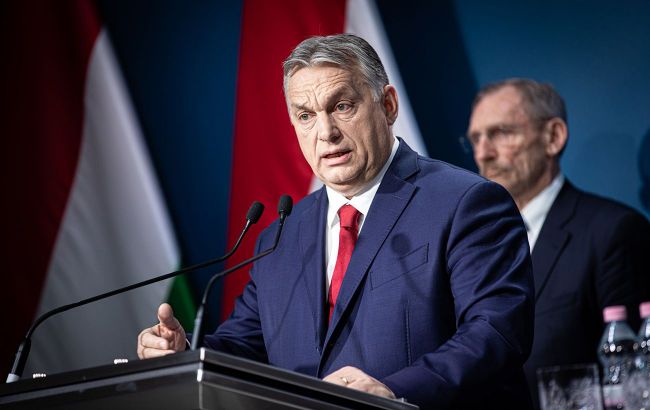 Photo: Hungarian Prime Minister Viktor Orbán (facebook.com/orbanviktor)
Elections in Hungary have not yet taken place, but Budapest officials are already discussing whether Prime Minister Viktor Orbán will agree to recognize the results if he loses. After his defeat in 2006, he brought people out into the streets, and this time, he may go even further, reports Politico, citing former Fidesz MP Zsuzsanna Szelényi.
Orbán may not recognize the result
Zsuzsanna Szelényi — one of the first members of Fidesz who later left the party — believes the prime minister is capable of taking extreme steps.
“If the opposition wins just a simple majority, Orbán will have a lot of tools to make it almost impossible for a new government to be formed or even for a new parliament to be convened,” she said.
He could provoke a constitutional crisis and declare a state of emergency, the politician believes.
What the polls show
Polling data varies depending on who conducted it:
- Independent companies and those close to Tisza: Magyar leads Orbán by 8–10 percentage points.
- Companies with ties to Fidesz (including the Nézőpont Institute and the Center for Fundamental Rights): a confident lead for Orbán.
How Orbán behaved after defeats before
The last time Fidesz lost was in 2006. At first, Orbán acknowledged the defeat. But six months later — after the leak of a speech by the Socialist leader, who admitted he had lied to voters — the situation changed.
Fidesz lawmakers took advantage of the protests. They dismantled barriers around parliament so the crowd could approach the building. “Fidesz took politics to the streets and harried the government with highly obstructionist tactics in parliament,” Szelényi recalls.
She believes Orbán is likely to repeat the same pattern. “Orbán can make life very difficult subsequently for Tisza to govern,” she said.
Even in the event of victory, the opposition may face serious obstacles. Without a two-thirds majority in parliament, Tisza will not be able to pass most reforms.
Among them are measures required by Brussels to unlock about €18 billion in EU funds frozen over rule-of-law violations.
The media writes that Orbán is unlikely to directly claim election fraud, as this would harm his chances of a political comeback. Instead, he may challenge results in individual districts and push supporters toward street protests.
“The more damage he can do to the new government and undermine it, the better chances for him to mount later a political comeback,” the media quotes political scientist Gábor Tóka.
Earlier, RBC-Ukraine reported that ratings do not reflect the real picture — Tisza’s advantage is visible at the national level, but elections are decided in single-member districts, where Fidesz has deeply rooted networks of influence in villages and small towns.
So, the result is unpredictable, and no one, even experts, knows who will win.
Orbán has turned Zelenskyy’s statement into a campaign tool, but this time, voters may no longer buy the usual rhetoric. For years, Hungary’s prime minister has built a narrative: I'm protecting Hungary from external enemies.
Zelenskyy’s statement about an address fit this pattern perfectly. Pro-government media immediately presented it as proof of a threat from Ukraine. But voters have heard this many times before, and experts say the effect is weakening.