Novorossiysk under scrutiny: Ukraine strikes threaten Russia’s oil exports

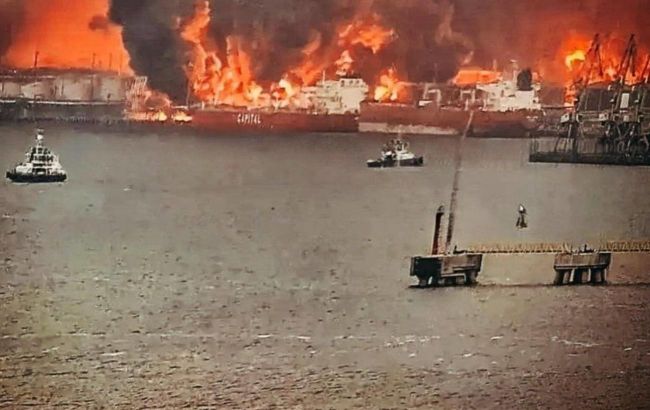 Photo: aftermath of a strike on a Russian port (Getty Images)
He reminded that Novorossiysk is Russia’s largest port, and that export volumes are expected to increase due to the seasonal change. The Navy spokesperson suggested that Russians will pay more attention to export capabilities, considering developments in the north of Russia, in Ust-Luga.
"But there is a problem — we can reach it. Something explodes and also affects export capacities that allow the occupiers, during the fuel crisis, to earn additional money to finance the war," Dmytro Pletenchuk said.
He noted that the enemy’s industrial potential needs to be reduced in order to minimize its ability to finance aggression.
Remnants of the Black Sea Fleet
The Navy spokesperson said that combat units of the Black Sea Fleet of the aggressor state, which were temporarily withdrawn from Crimea, are currently stationed in Novorossiysk.
"If the damage to one of the frigates is confirmed, five carriers of Kalibr-type missiles will remain in the Black Sea area. A large volume of oil also passes through Novorossiysk, and its export 'fuels' the war against Ukraine," the statement said.
He added that under these conditions, the Russian forces still have three surface vessels and two submarines in service that are carriers of cruise missiles.
On the night of April 5, drones attacked Novorossiysk — videos of a fire at the Sheskharis terminal and reports of explosions appeared online. The Transneft facility, where the largest oil tankers are serviced, also caught fire.
The Armed Forces of Ukraine confirmed that Ukrainian defenders struck the oil terminal in the port of Ust-Luga again on the night of April 7.
In addition, drone strikes forced the aggressor country to temporarily suspend oil shipments through both ports — Primorsk and Ust-Luga. The infrastructure sustained significant damage, and fires broke out at the facilities.