No price cap? West preparing radical strike on Russian oil exports, Reuters reports

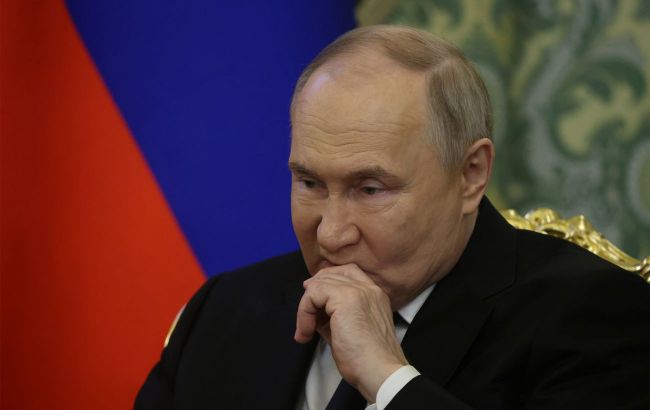 Photo: Russian President Vladimir Putin (Getty Images)
The EU and G7 plan to lift price caps on Russian oil and impose a radical ban on maritime shipments in order to significantly curb Kremlin revenues, Reuters informs.
The G7 countries and the European Union have decided to shift their focus and reassess the factors affecting Russian oil exports. As a result, a complete ban on maritime shipments is now under consideration.
This move aims to significantly reduce Kremlin revenues from oil exports, which finance Russia’s war against Ukraine, according to six sources familiar with the situation.
The maritime ban would mainly target tankers from EU fleets, such as those of Greece, Cyprus, and Malta, which currently transport a significant portion of Russian oil to India and China. Russia exports over a third of its oil this way. If the ban is implemented, such trade would nearly stop.
The rest of Russia’s exports are carried out through a so-called shadow fleet — old, opaque tankers operating outside Western oversight and international maritime standards.
If the ban is enforced, Russia would have to significantly expand this fleet to circumvent restrictions, but the costs would rise sharply, reducing the economic benefit of exports.
At the same time, the new ban could impact global energy markets, driving up oil and refined product prices in Asia and Europe.
Possible part of a new sanctions package
According to Reuters, the ban could become part of the next EU sanctions package against Russia, planned for adoption in early 2026. The EU aims to coordinate the decision with the G7 before including it in the official sanctions package.
British and American officials are actively promoting this idea in technical G7 meetings. The final US decision will depend on the pressure strategy adopted by President Donald Trump’s administration in the context of ongoing peace negotiations between Ukraine and Russia.
Although the G7 and EU have almost entirely stopped importing Russian oil since 2022, the new ban would be the most significant measure toward an almost complete prohibition of trade in Russian crude oil and petroleum products, covering not only imports but also transport and maritime services.
Oil exports via the shadow fleet
The G7 introduced price caps on Russian oil in 2022 following Russia’s invasion of Ukraine, allowing third countries to purchase oil as long as its price did not exceed the established limit.
To bypass this restriction, Russia redirected a significant portion of its exports to Asia using its own vessels, many of which later became subject to Western sanctions.
According to the Finnish Centre for Energy and Clean Air Research, in October 2025 alone, Russia exported 44% of its oil using shadow fleet tankers.
Analysts at Lloyd’s List Intelligence have calculated that the total fleet handling sanctioned oil from Russia, Iran, and Venezuela consists of 1,423 tankers, of which 921 are under US, UK, or EU sanctions.
Recently, the largest oil carrier in Türkiye refused to work with Russia following a tanker explosion.
In addition, on November 28, a fire broke out on two tankers belonging to Russia’s so-called shadow fleet in the Black Sea, near the Bosporus.