NATO would strike St. Petersburg and Kaliningrad if Russia attacks, WSJ reports

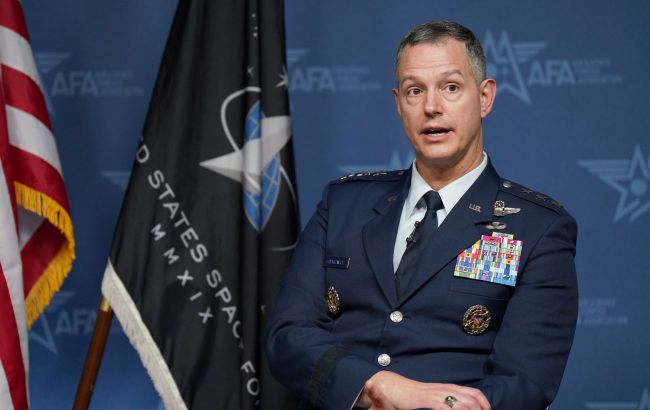 Photo: General Alexus Grynkewich, NATO's Supreme Allied Commander Europe (Flickr / Air & Space Forces Association)
NATO has unveiled a "theory of victory" in the event of a possible Russian attack. The strategy involves blocking the initial assault, stopping any further advance, and breaking the enemy's ability to fight, General Alexus Grynkewich, NATO's Supreme Allied Commander Europe, said at the Warsaw Security Forum, according to The Wall Street Journal.
Grynkewich unveils NATO's "theory of victory"
Grynkewich said the classified version of the plan was finalized three months ago. It calls for investing in "affordable mass" — relatively cheap drones — to complement the Alliance's arsenal of more sophisticated weapons.
The decision was influenced by Ukraine's battlefield experience, the outlet writes. If Russia attacks, NATO's first objective will be to block the initial offensive and prevent any further advance, Grynkewich said.
"Enemy formations will be starved of replenishment. Enemy commanders will be unable to control their forces. Enemy forces and support capabilities will be reduced and destroyed," the top commander said.
In implementing this strategy, Grynkewich noted that NATO would not seek to defeat Russia or undermine its government. Instead, its goal would be to stop any Russian attack.
However, Grynkewich did not provide a timeline for strengthening NATO's defenses, which is taking place amid an ammunition shortage caused by the war in Iran.
What is known about the strategy
NATO's "theory of victory" builds on the work of retired General Chris Donahue, the former Army commander in Europe and head of the alliance’s Land Command.
He was forced to leave his post in July after Defense Secretary Pete Hegseth downgraded his position.
The approach is designed to block Russian military operations. Russia's geographic advantages and massive defense industry could allow it to attack the Baltic states, Poland, and other NATO allies before the Alliance can organize a powerful response.
Under Donahue's strategy, an extensive "autonomous zone" would be created, allowing drones and ground robots to suppress a Russian attack without significant losses among allied forces.
Meanwhile, long-range missiles would strike Russian command posts and air defense systems in:
-
The Kaliningrad exclave
-
Areas near St. Petersburg
-
Belarus
This would undermine Russia's efforts to control the skies and allow the US Army's V Corps and other NATO ground forces to launch a counterattack, the outlet writes.
NATO air forces would move quickly to strike Russian reinforcements heading to the battlefield and hit other targets behind enemy lines.
NATO's attacks would be supported by a "data backbone" — a system for instantly sharing classified target data among allied forces through the cloud. Elements of this network were tested in the Middle East during the US war with Iran.
The approach has been dubbed the Eastern Flank Deterrence Initiative. According to US military officials, its goal is to make Russian President Vladimir Putin abandon any potential attack on NATO.
RBC-Ukraine previously reported that NATO had developed a "theory of victory" in the event of a Russian attack. The new concept calls for a rapid response and extensive use of emerging technologies.
In addition, Grynkewich said Europe should increase its support for Ukraine in response to Russian hybrid attacks against countries across the continent.