NATO prepares Theory of Victory in case Russia attacks — Bloomberg

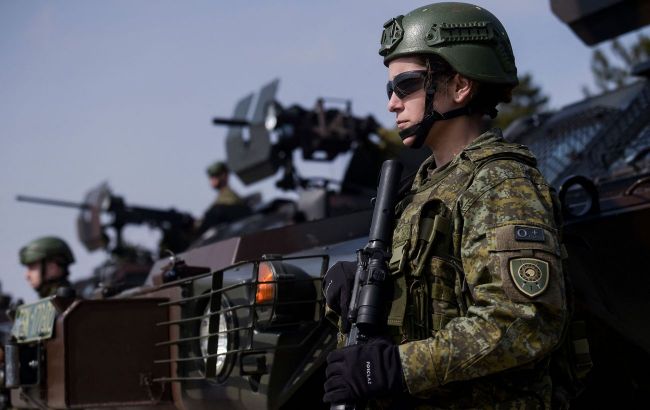 Photo: NATO servicemember (Getty Images)
NATO has developed a Theory of Victory in the event of a Russian attack. The new concept calls for a rapid response and extensive use of new technologies, according to Bloomberg.
The strategy, titled Theory of Victory, is being developed by General Alexus Grynkewich, Supreme Allied Commander Europe of NATO. Bloomberg obtained an unclassified version of the document.
Grynkewich plans to present the document in Poland on October 12. Its goal is to explain how the alliance will act in the event of an invasion of NATO territory.
According to officials and diplomats familiar with the document's preparation, the new concept is intended to give allies a clearer idea of a possible response to Russian aggression.
Drones and AI in new strategy
One of the main changes in NATO's approach concerns the use of new technologies. The Alliance plans to combine traditional weapons and military units with capabilities that have been actively developed during Russia's war against Ukraine.
This includes, in particular, drones, minimally crewed systems, and AI-based target acquisition capabilities.
In the event of a Russian attack, NATO plans to first halt the invasion using ground forces and other resources as part of the NATO Eastern Flank Deterrence Initiative.
Once it has room to maneuver, the alliance intends to focus on the enemy's command and control systems. According to the concept, destroying these systems should help quickly weaken Russian forces and lead to their defeat.
NATO wants to deter Russia before war even begins
At the same time, the new strategy emphasizes NATO's defensive nature. The alliance must also avoid actions that could lead to unintended escalation.
The document also specifically addresses the need for joint countermeasures against hybrid threats. These refer to aggressive actions that do not cross the threshold of open military conflict but can create serious problems for NATO countries.
The logic behind the strategy is that demonstrating the Alliance's readiness will in itself serve as a deterrent. A potential adversary must understand that it cannot defeat NATO.
Colonel Martin O'Donnell, a spokesperson for Grynkewich, does not disclose details of the document but emphasizes the Alliance's defensive nature.
"The Supreme Allied Commander Europe's theory of victory is simple: maintain NATO’s advantage," he says.
According to O'Donnell, due to the unstable global situation, the alliance must create the conditions to deter aggression now and be prepared to win in the event of an attack.
How Russia-Ukraine war affected NATO's plans
The new concept is also intended to show allies how NATO plans to integrate conventional weapons with technologies whose development has been significantly accelerated by the full-scale Russian invasion of Ukraine.
This goes beyond just drones. The alliance is exploring broader applications of automated systems and artificial intelligence on the battlefield.
The document is also intended to serve as an argument in favor of further increasing defense spending and preparing member countries for a potential conflict.
European allies have already significantly increased their defense spending. At the same time, discussions are ongoing within NATO regarding how to allocate these funds: between traditional weapons, such as tanks, and new technologies that have proven their value in the war in Ukraine.
Estonia is also changing its defense strategy in response to the threat from Russia and is shifting to active defense. The country is reinforcing its troops along the border and purchasing long-range systems such as HIMARS, M57, and Chunmoo.
In addition, Tallinn is preparing for possible provocations in the border town of Narva and considers the coming years to be critical for the security of the Baltic states.