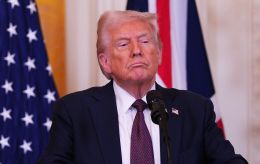
NATO curbs intelligence sharing with US over Greenland dispute

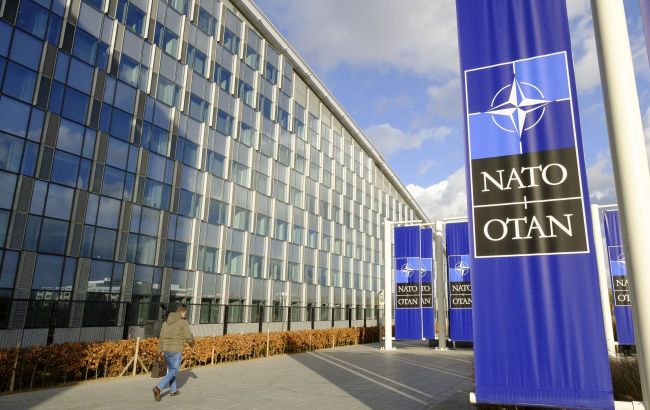 Photo: NATO officials began to conceal intelligence exchanges with the US (Getty Images)
NATO officials are restricting access to intelligence sharing with the US. This comes amid President Donald Trump's encroachments on Greenland, The i Paper reports.
According to the agency's sources, NATO insiders say that some officials have begun to conceal the exchange of intelligence with the US.
The trust that has been built up over decades is being destroyed by Trump's intentions to annex Greenland and his threats to impose tariffs on Alliance member countries.
Crisis of confidence
Anonymous speakers tell the agency that intelligence officials are no longer communicating openly because of the risk that the information could help Trump implement his plan to annex Greenland.
A senior NATO insider tells that this creates tension and mistrust between European and American colleagues in NATO.
He adds that some NATO employees felt that the country they all looked up to and valued had now stabbed them in the back. In turn, American military personnel in NATO are forced to apologize to their colleagues for their country's policies, which creates an atmosphere of mistrust.
This is the most serious deterioration in relations between Washington and its allies since the Suez Crisis of 1956. Therefore, delegations from Britain, France, and Germany are already working in Greenland on a plan to strengthen their military presence as a signal to Trump.
Undermining world order
The open exchange of intelligence between the two countries dates back to the secret Sinkov Mission of 1941 on German codes, which was a critical milestone in the exchange of cryptography technology and knowledge between the Allies during World War II.
Since then, the US and the UK have continued to exchange intelligence through an agreement often referred to as Two Eyes and the Five Eyes intelligence alliance, which also includes Australia, Canada, and New Zealand.
A source in British intelligence, with whom the agency spoke, said that Trump's latest threats had contributed to the idea that Britain was no longer an ally of the Two Eyes movement, but rather just part of Europe.
Dr. Dan Lomas, a security and intelligence expert at the University of Nottingham, said that Trump's second term in Washington has a destabilizing effect on trust between intelligence services, which could become a long-term problem.
The situation around Greenland has escalated after Donald Trump's statements about the US's intention to purchase the island for $700 billion. The American President justifies this as a strategic necessity, arguing that Denmark is unable to protect the region from being surrounded by the Russian and Chinese fleets.
Due to the refusal of European allies to support this initiative, Trump announced the introduction of tariffs: from February 1, the rate on goods from eight NATO countries (including the United Kingdom, Germany, and France) will be 10%, and from June 1, it will increase to 25%.
In response to pressure from Washington, Denmark has strengthened its military contingent on the island and sent its commander-in-chief there. At the same time, the European Council convened an extraordinary summit to coordinate the allies' defense and economic position in the Arctic.