NASA unveils nuclear-powered mission to Mars in major space breakthrough

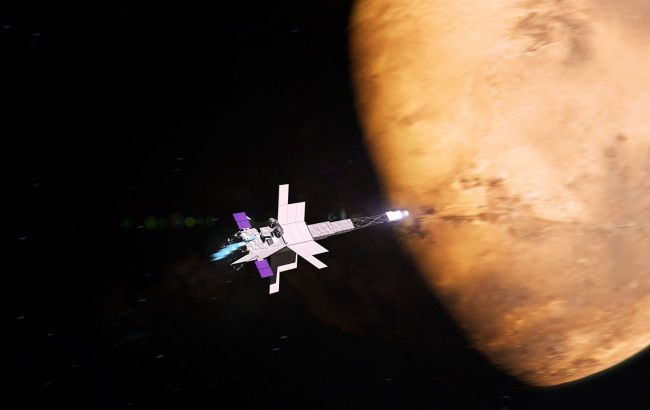 SR-1 Freedom could overshadow past U.S. space achievements (photo: Wikimedia)
NASA has officially unveiled its first mission using nuclear electric propulsion, called SR-1 Freedom. The project is expected to become a major step forward in deep space exploration, according to BGR.
According to NASA, the SR-1 Freedom spacecraft is designed to solve the main problem of long-distance missions — the drop in power from solar panels. For example, near Jupiter, solar energy levels are only about 4% of those near Earth, which directly affects energy capacity.
How nuclear electric propulsion works
Fission reaction: Uranium is irradiated with neutrons to generate a large amount of heat.
Electric power: Turbines convert heat into electricity, which ionizes gas.
Plasma jet: The ionized gas turns into plasma, and its ejection produces thrust.
NASA believes this method is up to 10 times more powerful than conventional reactors and significantly more efficient than chemical fuel. While traditional launch vehicles are still needed to reach orbit, in deep space a nuclear engine can accelerate spacecraft to speeds previously unattainable.
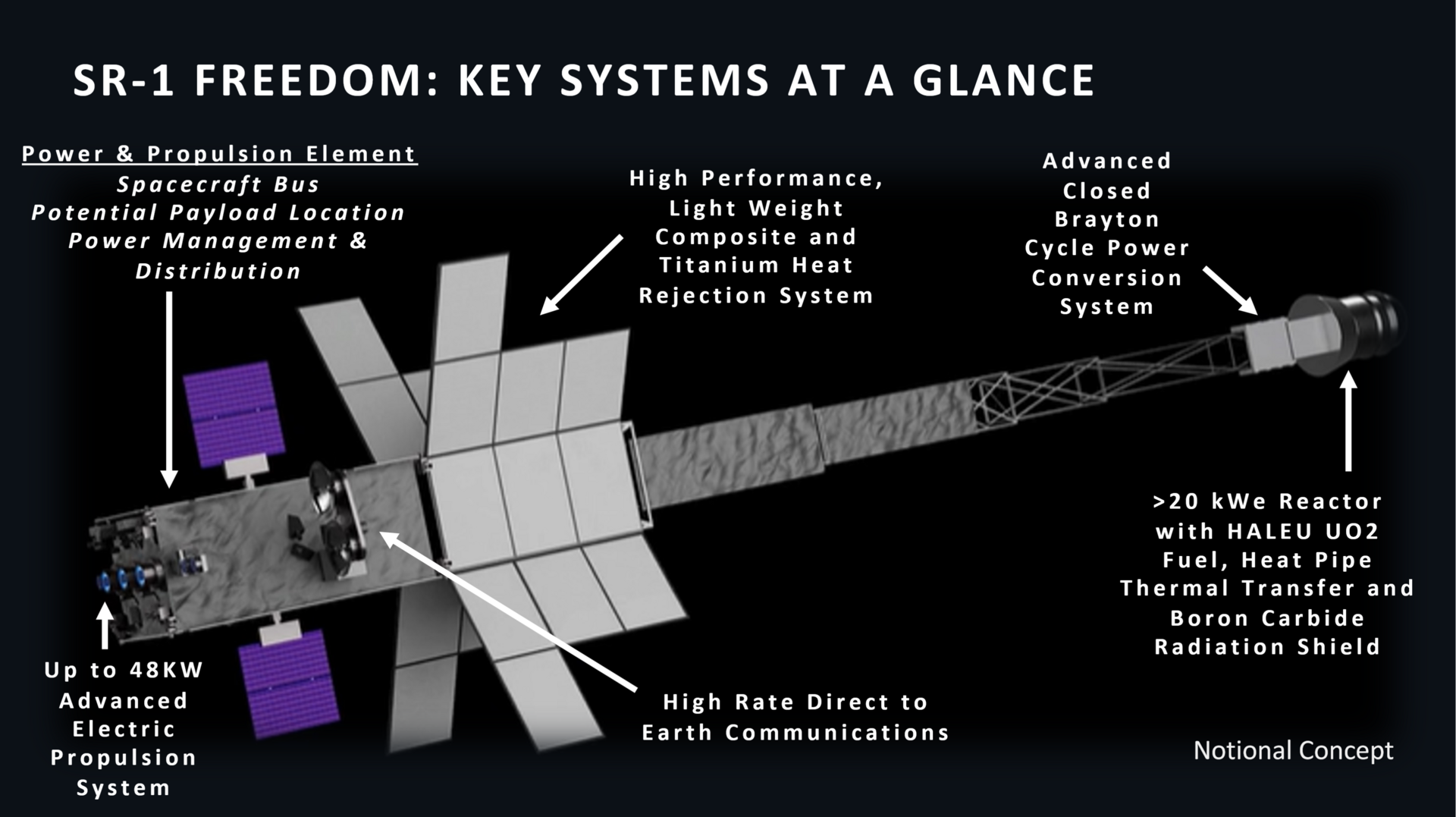 SR-1 configuration (photo: Wikimedia)
Skyfall mission
The main task of SR-1 Freedom will be to deliver the Skyfall mission to Mars. This is a joint project of the Jet Propulsion Laboratory (JPL) and drone developer AeroVironment.
Skyfall involves deploying a fleet of three remotely operated helicopters onto the surface of Mars. If the delivery is successful, SR-1 Freedom technology could overshadow the planetary research itself and become a turning point for the entire U.S. aerospace industry.
Ambitions
The launch is scheduled for late 2028. NASA Administrator Jared Isaacman stated that the nuclear reactor is already almost completed. To speed up the process, the agency is using components from the Gateway lunar station, which has not yet been launched into space.
At the same time, the scientific community is expressing skepticism. What concerns scientists:
- Tight timeline: Development of such systems usually takes 3–5 years, but NASA is aiming for a much shorter timeframe.
- Financial pressure: The project is being implemented amid a twofold reduction in NASA’s science budget.
- Safety: Professor Andrew Higgins criticized NASA’s “LEGO approach, where separate components are assembled. He believes this could increase mission risks.
Despite the skepticism, NASA is confident that the success of SR-1 Freedom will lay the foundation for the Lunar Reactor-1 program — the creation of the first permanent nuclear base on the Moon.