NASA unveils aviation breakthrough set to save hundreds of millions

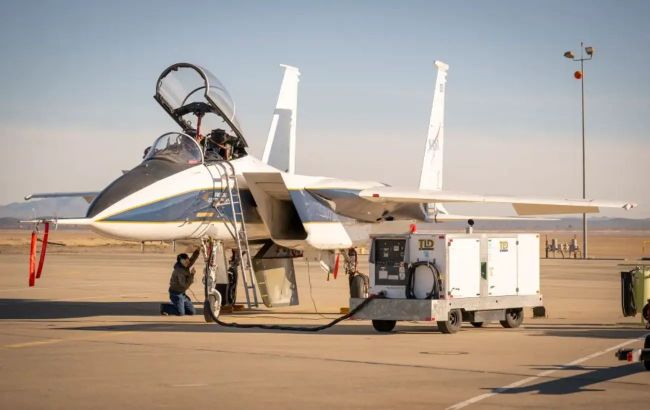 NASA confirms functionality of CATNLF wing on F-15B (Photo: NASA)
NASA has begun flight testing an innovative wing technology that could reduce fuel consumption for commercial airlines by up to 10%. To test the design, engineers used an F-15B fighter jet, with a vertical flight wing model attached under its fuselage, according to NASA.
Technical essence of the CATNLF project
The CATNLF (Crossflow Attenuated Natural Laminar Flow) project focuses on maintaining stable laminar (smooth) airflow over the wing surface.
NASA researchers have been working on this design since 2014, first using computer modeling and later testing it in wind tunnels at the Langley Research Center.
The new design allows air to flow smoothly over the surface without flow separation. This was previously considered a technically difficult challenge.
“Even small efficiency improvements can add up to significant reductions in fuel burn and emissions for commercial airlines,” explained Mike Frederick, CATNLF chief investigator at NASA’s Armstrong Research Center.
As part of the tests, scientists used an F-15B fighter jet as a flying laboratory. This allowed them to test the design in real atmospheric conditions, where turbulence is lower than in a wind tunnel.
“Flight testing allows us to increase the size of the model and fly in air that has less turbulence than a wind tunnel environment, which are great things for studying laminar flow,” added Michelle Banchi, the project’s lead researcher at the Langley Center.
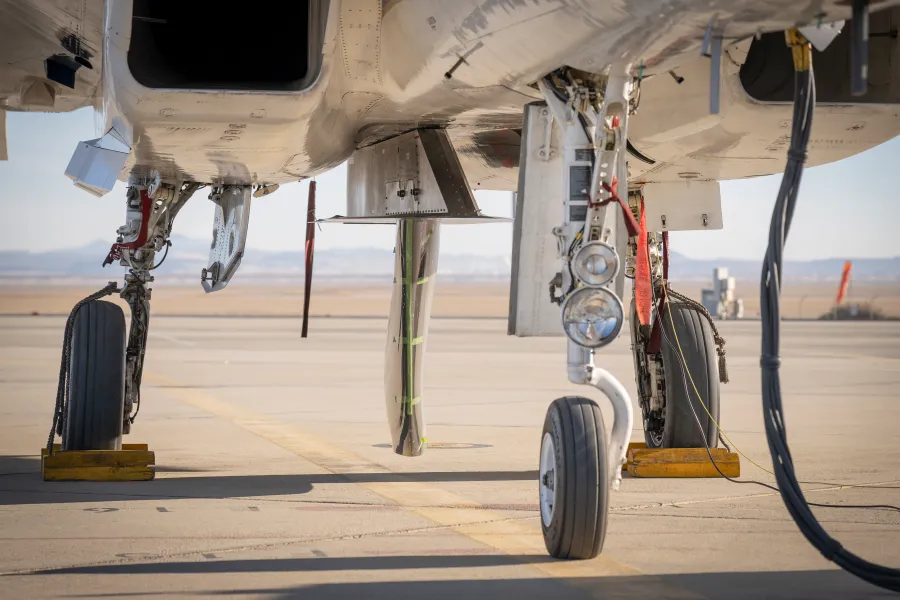
NASA testing (Photo: NASA)
Why this matters
Fuel remains the highest cost in the aviation industry. The implementation of the CATNLF design promises significant savings.
What researchers considered:
Fuel savings per flight: For a standard Boeing 777 on the New York–London route, a 10% reduction in fuel consumption means about 5,500 liters of fuel saved per flight.
Financial impact: Based on April 2026 prices (over $1.45 per liter in Europe), the savings per transatlantic flight exceed $7,000.
Annual effect: A single aircraft operating daily flights on this route could save up to $2.6 million per year. With more than 1,300 Boeing 777 aircraft in operation worldwide, the total industry-wide benefit could reach hundreds of millions of dollars.
Project status and future tests
NASA noted that on January 12, 2026, the aircraft completed high-speed runway tests, reaching 232 km/h. At the end of January, the first full flight took place, lasting 75 minutes at an altitude of over 10,300 meters.
Using the F-15B fighter jet as a test platform allowed NASA to avoid building an expensive demonstrator aircraft, significantly reducing development costs.
A further series of 15 test flights is planned to evaluate performance at different speeds and altitudes. According to ICAO forecasts, passenger numbers may double over the next 20 years, so NASA plans to implement CATNLF technology in next-generation aircraft.
In addition to subsonic aviation, researchers are also exploring adapting the design for supersonic flight.