NASA blocked key iPhone 17 Pro Max features on Artemis 2 mission: What's behind it

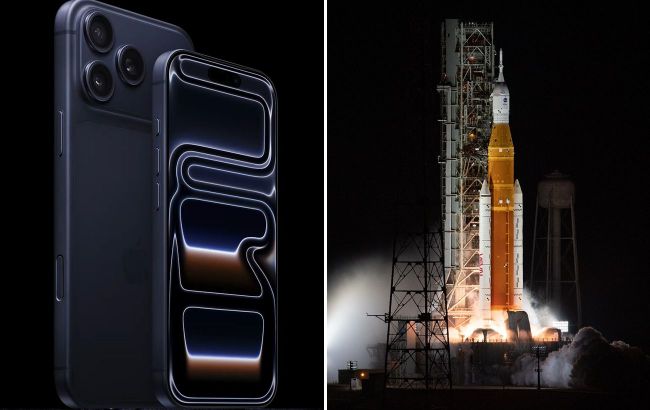 iPhone 17 Pro Max had strict limitations in space (collage: RBC-Ukraine)
The iPhone 17 Pro Max has been included in the equipment list for NASA’s Artemis 2 mission. This marks one of the first cases when the space agency has allowed crew members to take smartphones on a flight to another celestial body, according to The New York Times.
To get the iPhone 17 Pro Max on board, NASA conducted an extensive four-phase verification process. Researchers identified potential risks — from lithium-ion battery performance to electromagnetic radiation — and then developed mitigation strategies.
Interestingly, the initiative came from NASA itself, not Apple. The agency purchased the smartphones independently. This effectively became one of the largest free marketing campaigns in the tech giant’s history.
Technical limitations in space
The use of smartphones on board was strictly regulated — astronauts did not have access to typical functions. Here’s what was restricted:
- Connectivity — Bluetooth, Wi-Fi, and cellular networks were disabled to avoid interference with the spacecraft’s navigation systems.
- Apps — the crew could not play games or use FaceTime.
- Media only — devices were used exclusively as digital cameras to capture images of Earth and the Moon.
iPhone 17 Pro Max camera in space conditions
The choice of model was driven by significant improvements in the new generation’s optics. These features allow astronauts to capture clear images of outer space.
Key camera upgrades:
- 8x optical zoom — equivalent to a 200mm focal length, enabling detailed shots of the Moon’s surface.
- Larger sensor — the telephoto sensor is 56% bigger than in previous models, which is crucial for low-light conditions.
- Center Stage front camera — a new 18 MP ultra-wide selfie camera allows group shots of the crew inside the cabin without changing device orientation.
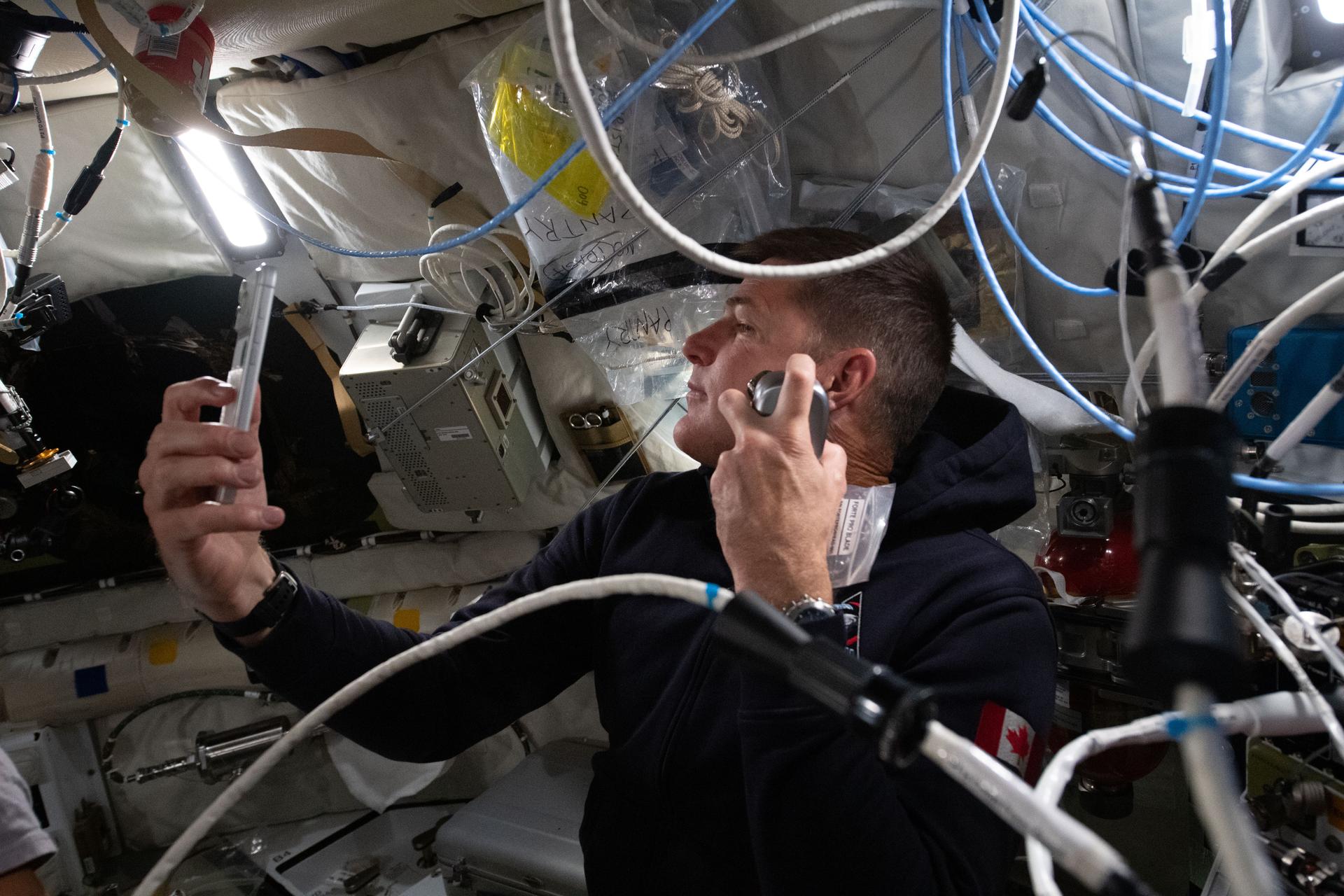 Artemis II mission specialist and Canadian Space Agency (CSA) astronaut Jeremy Hansen (photo: NASA)
Apple technologies have assisted NASA before: the Perseverance rover was equipped with a processor similar to chips used in older Mac computers.
However, NASA believes that using the iPhone 17 Pro Max as a personal device for the crew marks a new stage in integrating consumer electronics into space programs.