Einstein was wrong? Scientists create most accurate 3D map of the Universe

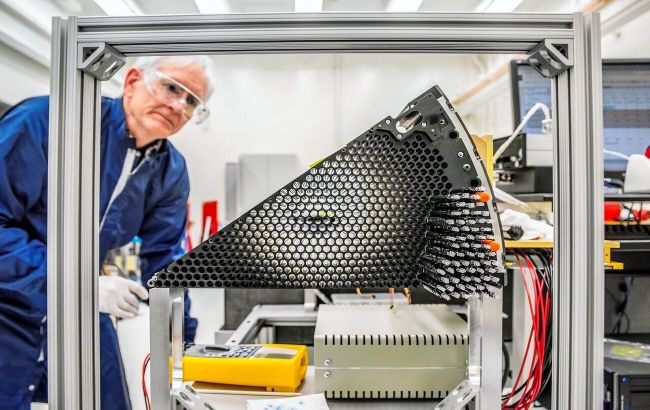 The DESI space research instrument has achieved the impossible (photo: wikimedia.org)
An international group of scientists has completed the most extensive 3D map of the Universe in history. Data from the DESI instrument covers more than 47 million galaxies and suggests that dark energy — the greatest mystery of the cosmos — may be unstable, according to Berkeley Laboratory.
A challenge to Einstein and new physics
According to the standard Lambda-CDM model, the Universe is expanding due to dark energy, which is considered a constant value. However, early results from DESI analysis indicate that dark energy may change or weaken over time.
If these hints are confirmed within the next two years, scientists may have to abandon the idea of a stable cosmological constant.
Alternative theories, such as quintessence, suggest that the density of dark energy may have fluctuated throughout the history of the cosmos, which would completely change predictions about the ultimate fate of the Universe.
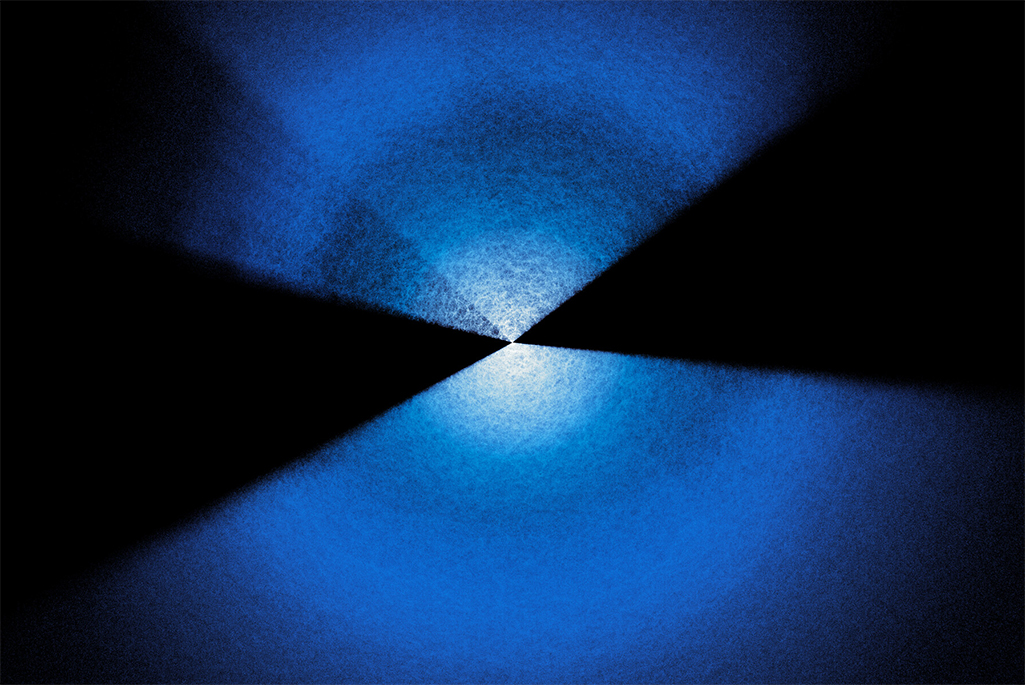 DESI 3D map for studying dark energy (photo: wikimedia.org)
How the experiment was conducted
To measure the expansion of the Universe, scientists used baryon acoustic oscillations (BAO) — a kind of “frozen” bubbles from the early plasma state of the cosmos.
Technical capabilities of the DESI instrument
Robotics: 5,000 optical fibers simultaneously focus on different objects.
Depth: the instrument has looked 11 billion years into the past.
Speed: the system collects 80 GB of data per night, analyzing the chemical composition and recession speed of millions of galaxies and quasars.
An impossible mission?
The path to completing the final map was full of dramatic challenges. In 2022, the Kitt Peak Observatory nearly suffered destruction due to the massive Contreras wildfire. Only the heroism of firefighters saved the unique telescopes from being destroyed.
In addition, the project survived a major cyberattack on the NOIRLab networks. To keep operations running, scientists developed a “Sneakernet” protocol: they disconnected telescopes from the internet, set up Starlink satellite communication, and manually transported hard drives with data each morning by car down the mountain for processing.
What’s next?
Although the collection of primary data has been completed, full analysis will continue until 2027–2028. The DESI project has already been extended to enable a deeper study of dwarf galaxies and faint stars.
Ahead lies the launch of DESI-II and collaboration with the Euclid space telescope. The scientists’ goal is to determine once and for all whether dark energy is a constant force or whether the Universe is still preparing a major surprise.