NASA readies Valkyrie humanoid robot to pioneer lunar colonization

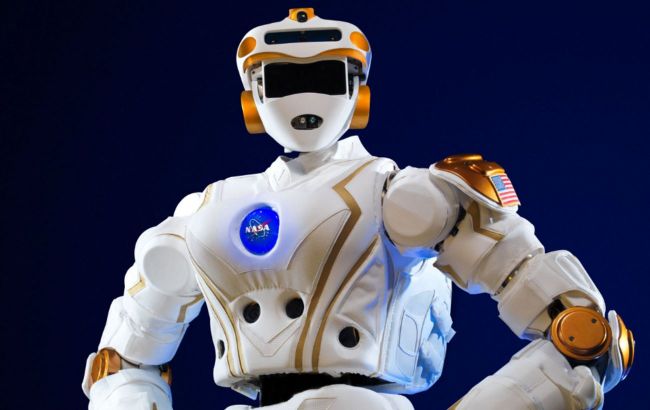 Space bases will be adapted for robots (photo: NASA)
Humanity will not explore the Moon alone - NASA is testing robots that will assist astronauts at future bases. Engineers at the Johnson Space Center are preparing them for work during the exploration of deep space, according to NASA.
Why are robots necessary in space?
The space environment presents researchers with devastating radiation, extreme temperatures, vacuum, and abrasive dust.
Robotic systems can operate without oxygen, water, or heavy spacesuits, performing critically important operations.
What exactly?
- Repair of external elements of space stations;
- Inspection of damaged equipment;
- Reconnaissance of unexplored areas of the Moon and Mars surfaces.
Building on the experience of operating Robonaut 2 and the humanoid robot Valkyrie, the development team created the iMETRO test site.
Here, engineers recreate the conditions of lunar and Martian bases, testing hardware and software for future systems.
Read more: 6 deadly threats from NASA: why colonizing the Moon could kill astronauts
What obstacles stand in the way of realizing the idea?
One of the main obstacles when controlling equipment on the Moon or Mars is radio signal delay - ranging from a few seconds to over 20 minutes.
To solve this problem, the software trains robots in semi-autonomous mode - the operator provides only general commands, while the robot performs minor coordination of actions and movements independently.
During recent tests, software from PickNik allowed a robotic arm to autonomously find a spacecraft hatch, turn the handle, open heavy doors, and move cargo inside.
These tests are also changing the approach to designing living modules: future lunar and Martian bases are being equipped with larger handles and bright lighting from the outset to make them convenient for both astronauts and their metal "colleagues."
More interesting:
-
Space solar power: Pentagon readies satellites with guidance beacons