Why Moon colonization could be fatal: 6 deadly NASA threats named

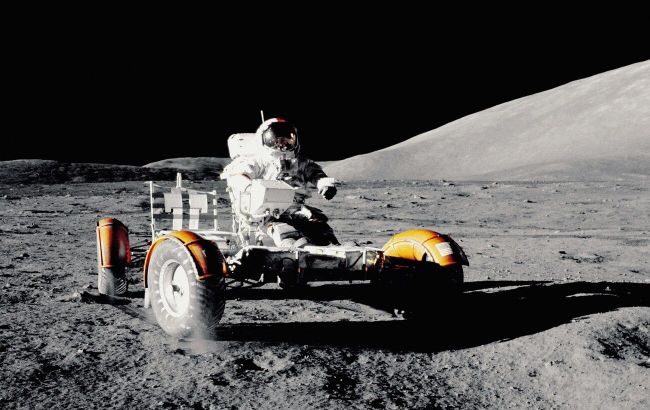 The challenges for the first lunar colonists will be catastrophic (photo: NASA)
NASA's lunar base could become humanity's first permanent settlement beyond Earth. However, life on the Moon will be deadly dangerous - astronauts face at least six serious factors, according to BBC Science Focus.
Main threats to life on the Moon
Astronauts on the surface of Earth's satellite will find themselves in an extremely aggressive environment where any equipment failure could be fatal.
Decompression and suffocation. In a complete vacuum, a person loses consciousness within 10–15 seconds, and irreversible damage or death occurs within 90 seconds. Loss of pressure causes fluids in body tissues to boil and swell.
Extreme temperatures. In sunlight, the surface heats up to over +120°C, while at night it drops to -130°C. In craters, temperatures reach −240°C.
Multi-layered spacesuits with liquid cooling systems protect astronauts, but prolonged exposure to these conditions gradually degrades materials.
Micrometeorites. Tiny particles of cosmic dust can penetrate helmets, tear spacesuit fabric, and gradually destroy the outer walls and solar panels of the base.
Deadly radiation. Due to the lack of atmosphere and a magnetic field, radiation levels on the Moon are 200 times higher than on Earth.
Solar storms pose a particular danger, requiring reliable shelters. The goal is to avoid receiving a massive dose of radiation.
Carbon dioxide poisoning. A malfunction in the filtration system or fans in a spacesuit leads to rapid CO2 accumulation. This causes headaches, dizziness, loss of consciousness, and increases blood acidity.
Lunar dust. Dust particles formed by micrometeorite impacts have extremely sharp edges. Dust settles on equipment, damages mechanisms, and if inhaled, can enter the bloodstream and damage internal organs.
Long-term challenges for future colonists
In addition to direct physical threats, long-term residence on the Moon will create additional problems for the body and psyche:
Weak gravity. Gravity on the Moon is only 1/6 of Earth's. The long-term effects of such an environment on muscles, bones, and the cardiovascular system of the human body remain poorly studied.
Isolation and confined spaces. Staying in a limited space with the same group of people, without fresh air, nature, or earthly landscapes, will create high psychological stress for colonists.
Currently, scientists are unsure whether lunar colonization justifies such high risks for astronauts.