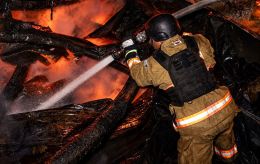
Moscow, St. Petersburg face gas shortages after strikes on refineries

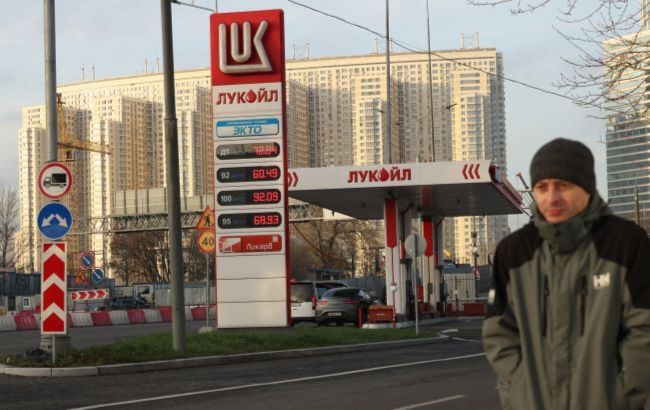 Fuel rationing introduced at gas stations in Moscow and St. Petersburg (photo: Getty Images)
Major gas station networks have introduced strict limits on the sale of gasoline and diesel fuel in several Russian regions, including Moscow, St. Petersburg, and Tatarstan, according to Novaya Gazeta Europe.
Where and what restrictions apply
Limits of up to 20 liters for AI-92 and AI-95 gasoline and up to 40 liters of diesel fuel per customer are in effect at Tatneft gas stations in Moscow and St. Petersburg.
Journalists report the company has restricted fuel sales across all regions where it operates.
Other major fuel retailers in the Russian capital have also introduced limits:
- Rosneft allows no more than 90 liters per vehicle or container
- Lukoil has set a limit of up to 100 liters of gasoline or diesel per receipt.
Temporary restrictions have also been introduced at some gas stations in Tatarstan. Local authorities claim this is being done to avoid artificial panic and ensure a stable situation.
At the same time, St. Petersburg's industry committee insists there are currently no conditions indicating a fuel shortage.
What caused such limits
Restrictions at gas stations coincided with successful strikes on Russia's oil infrastructure.
The day before, Ukrainian drones attacked the large TANECO oil refinery owned by Tatneft in Tatarstan, as well as the TAIF-NK facility in Nizhnekamsk.
Fuel crisis in Russia
Problems with fuel in Russia and in the occupied territories sharply escalated following a series of precision strikes by the Defense Forces of Ukraine on Russian fuel infrastructure and logistics.
Earlier, on the night of June 7, Ukrainian forces struck two major fuel depots in Crimea, including the Feodosia oil transshipment complex and the Semikolodezanskaya oil depot, which supplied fuel to Russian military units.
Due to the destruction of fuel storage sites and railway hubs, Russia's logistics system has collapsed. As a result, Russian forces officially admitted that fuel trucks failed to reach Crimea due to Ukrainian fire control, forcing the temporary authorities on the peninsula to completely suspend even fuel distribution under previously introduced coupon systems.
Experts note that due to repeated drone strikes, the oil refining sector of Russia has already declined to levels seen during the 2009 economic crisis. Since Russian refineries are forced to undergo prolonged shutdowns after attacks due to a lack of imported spare parts, fuel shortages are rapidly spreading from frontline regions to the largest cities of the country.