Middle powers are forming alliances without the US - Politico

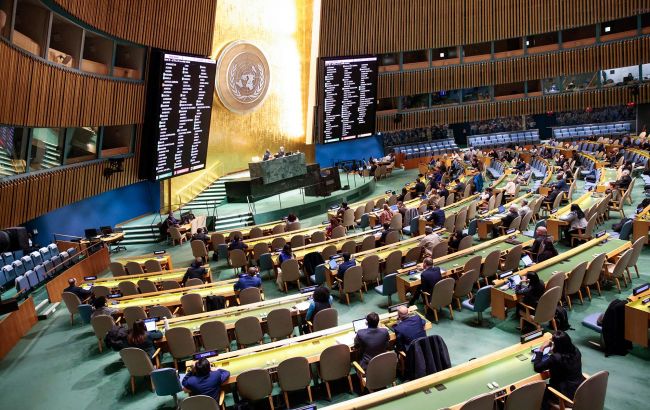 File photo: Voting at the UN General Assembly (Getty Images)
The UN General Assembly this week demonstrated that a number of countries are trying to build new international coalitions without the central role of the United States. But it became clear that allies still find it difficult to fully bypass Washington, reports Politico.
The meeting of world leaders became a kind of test for the middle powers, which seek to coordinate their policies more actively with one another. The prime ministers of Canada and Spain, Mark Carney and Pedro Sánchez, who have criticized US President Donald Trump, made it clear that they do not plan to meet with the American leader.
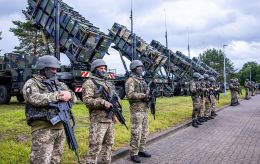
European countries are strengthening their own cooperation regarding Ukraine. Finland signed an agreement with Kyiv on cooperation in the field of drones, France announced a contract to supply radars and interceptors, while Canada deepened cooperation with European countries, including on supporting Ukraine.
Without the US, it is still difficult
However, Washington's diplomatic moves showed how difficult it is for partners to act completely without the United States.
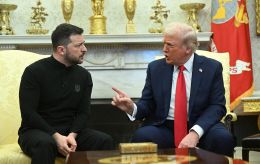
After President Volodymyr Zelenskyy's meeting with Trump, during which the Ukrainian leader said he had received final approval for licensing the production of Patriot systems, US Secretary of State Marco Rubio announced that Russian leader Vladimir Putin had been invited to an upcoming G20 meeting in Miami. The news prompted a mixed reaction in Europe.
"The push to create a world not organized by the US is very much still a work in progress. The reality is the US is still the central player," said Allison Minor, who previously held senior positions related to US policy toward the Persian Gulf countries.
War in Ukraine
Russia's war against Ukraine held a separate place during the UN General Assembly. Events surrounding Kyiv demonstrated that European countries and other US partners are trying to strengthen their own cooperation, while the American role remains significant.
Earlier, The Wall Street Journal criticized Trump's decision to invite Putin to the G20 summit in Florida. The newspaper's editorial board called it a signal that, in its view, could indicate that the Russian leader would face no punishment for aggression in Europe.
The media writes that this year's UN General Assembly demonstrated two trends at the same time: the desire of some countries to strengthen coordination and create international ties that do not depend exclusively on Washington, and the continued significant role of the United States in matters of global security, the war in Ukraine, and other international crises.
NATO is stepping up intelligence and information sharing in response to growing hybrid threats from Russia. Due to the scale of the challenges, all NATO countries have become the eastern flank.