Messi's brilliance or refereeing mistakes? How Argentina reached World Cup semifinals

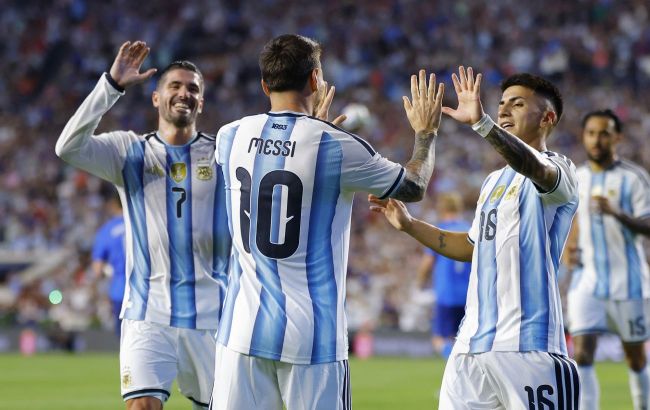 Argentina have faced criticism over refereeing decisions that favored them (Photo: Getty Images)
One of the biggest talking points of the ongoing FIFA World Cup is the growing suspicion that referees have shown excessive leniency toward Argentina. Social media has been flooded with claims of a conspiracy, with many fans alleging that FIFA wants to help Lionel Messi lift another World Cup trophy.
Yevhenii Nazarenko examines whether there is any truth behind the claims of refereeing favoritism toward the reigning world champions.
The defending champions, Argentina, are set to face England in the semifinals of the 2026 FIFA World Cup. On their way to the last four, the Albiceleste comfortably won their group before navigating one of the easiest knockout paths in the tournament, without facing a single traditional football powerhouse. The favorable draw alone sparked criticism from skeptical fans, many of whom accused FIFA of giving Argentina an easier route.
But that was only the beginning. Nearly every Argentina match has ended in controversy, with refereeing decisions dominating post-match discussions online.
Fueling the debate even further was investigative journalist Romain Molina, who recently released a video titled "The Mafia of Argentine Football." In it, the French reporter highlights several controversial issues surrounding the relationship between FIFA and the Argentine Football Association.
As a result, conspiracy theories and the number of people who believe them continue to grow. Instead of speculation, however, let's examine the actual refereeing incidents from this World Cup that have generated the most debate.
Messi's hat-trick overshadowed a controversial challenge
The first major controversy erupted in Argentina's opening match against Algeria, where Messi scored a hat-trick.
In the 32nd minute, Messi committed a foul by driving his studs into the shin and Achilles tendon of Algeria captain Aïssa Mandi. Despite the incident occurring away from the ball, Polish referee Szymon Marciniak did not even show the Argentine star a yellow card.
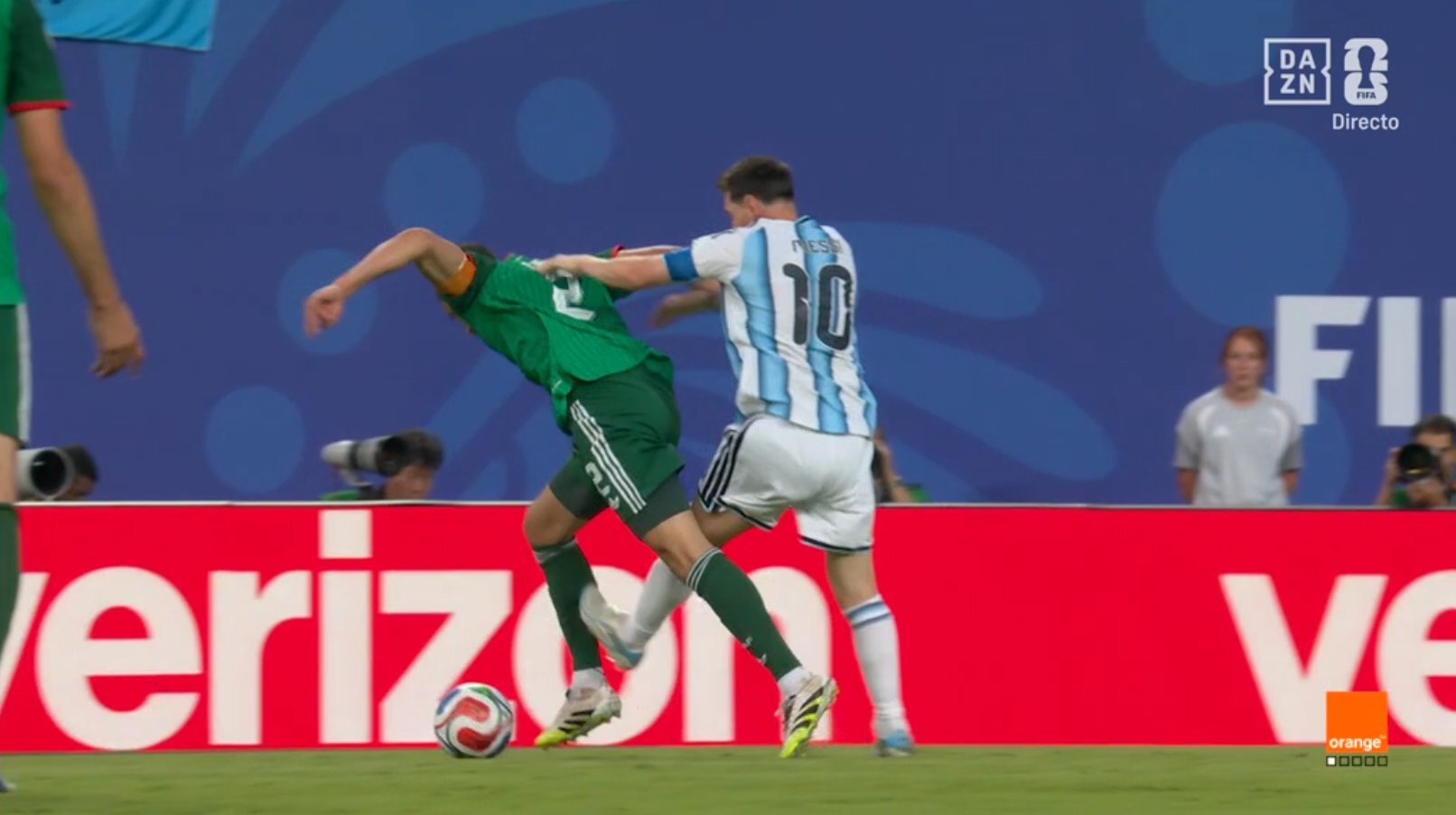 Lionel Messi's controversial challenge (Photo: Screenshot)
The VAR team also ignored the incident and chose not to review it. Outraged by the officiating, the Algerian Football Federation filed an official protest after the match. Algerian officials argued that the challenge had a direct impact on the game and exposed a double standard, pointing out that similar tackles often result in an immediate red card.
The referee's decision shocked more than just Algeria's coaching staff. The controversy quickly reached television pundits, with former Manchester City defender Nedum Onuoha and former MLS star Alejandro Moreno both saying on ESPN that Messi should have been sent off without question.
Was the goal against Austria preceded by a foul?
Another controversial moment came in Argentina's match against Austria. Although it did not receive as much attention as the incident in the opening game, it still sparked heated debate on social media.
The discussion centered on the attacking move that ended with yet another historic goal from Lionel Messi. Earlier in the buildup, Alexis Mac Allister challenged Austrian midfielder Xaver Schlager for the ball.
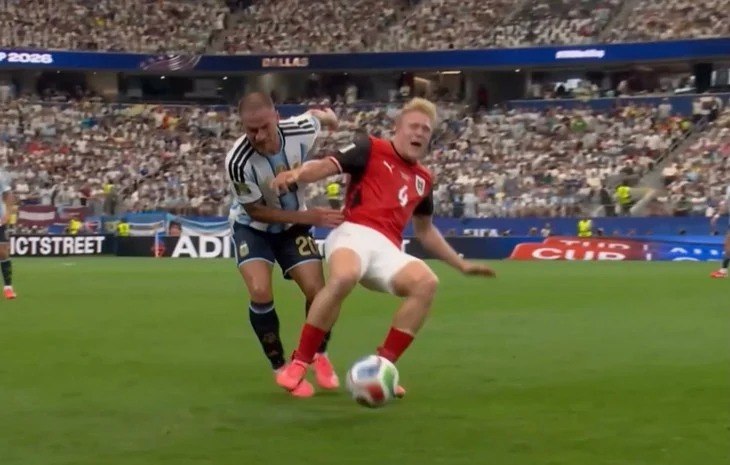
Controversial moment in the Argentina vs. Austria match (Photo: Screenshot)
Former goalkeeper Peter Schmeichel, along with many fans on social media, criticized the referee's decision, arguing that the Argentine midfielder had committed a foul and the goal should have been disallowed.
However, FIFA referee Nguyễn Mạnh Hải explained that Alexis Mac Allister was in control of the play at the moment of the challenge. According to him, Mac Allister got to the ball first and gained possession rather than bringing down his opponent to win it. For that reason, VAR was correct not to overturn the goal.
Major controversy in the match against Egypt
The third and perhaps most emotional controversy came in the Round of 16, where Argentina faced Egypt.
The match is remembered for Argentina's remarkable comeback, overturning a 2-0 deficit to win 3-2. For Egypt and its supporters, however, the game became a symbol of controversial officiating.
Two key incidents fueled the outrage.
First, the refereeing team disallowed an Egyptian goal for a foul. Later, another controversial moment occurred inside Argentina's penalty area, where Egyptian players appealed for a penalty after what they believed was a clear foul on Mohamed Salah.
The referee waved play on, while VAR determined there were no grounds to award a spot kick.
The reaction in Egypt was immediate. Following Algeria's lead, the Egyptian Football Association submitted an official complaint to FIFA, calling for a review of the referee's performance.
FIFA Referees Committee chairman Pierluigi Collina attempted to put the debate to rest by publicly defending the officiating team. He stated that the referee had handled the match objectively and that both the disallowed goal and the decision not to award a penalty were fully consistent with the Laws of the Game.
The red card that sent Switzerland home
Another major controversy emerged in the quarterfinal, where Argentina faced Switzerland.
The match was tied 1-1 after regular time, but Argentina eventually secured a 3-1 extra-time victory to book a place in the semifinals. Many observers believe the turning point came with the dismissal of Breel Embolo.
The key incident occurred in the 72nd minute. The referee initially awarded Switzerland a free kick for a foul on Embolo and showed Leandro Paredes a yellow card.
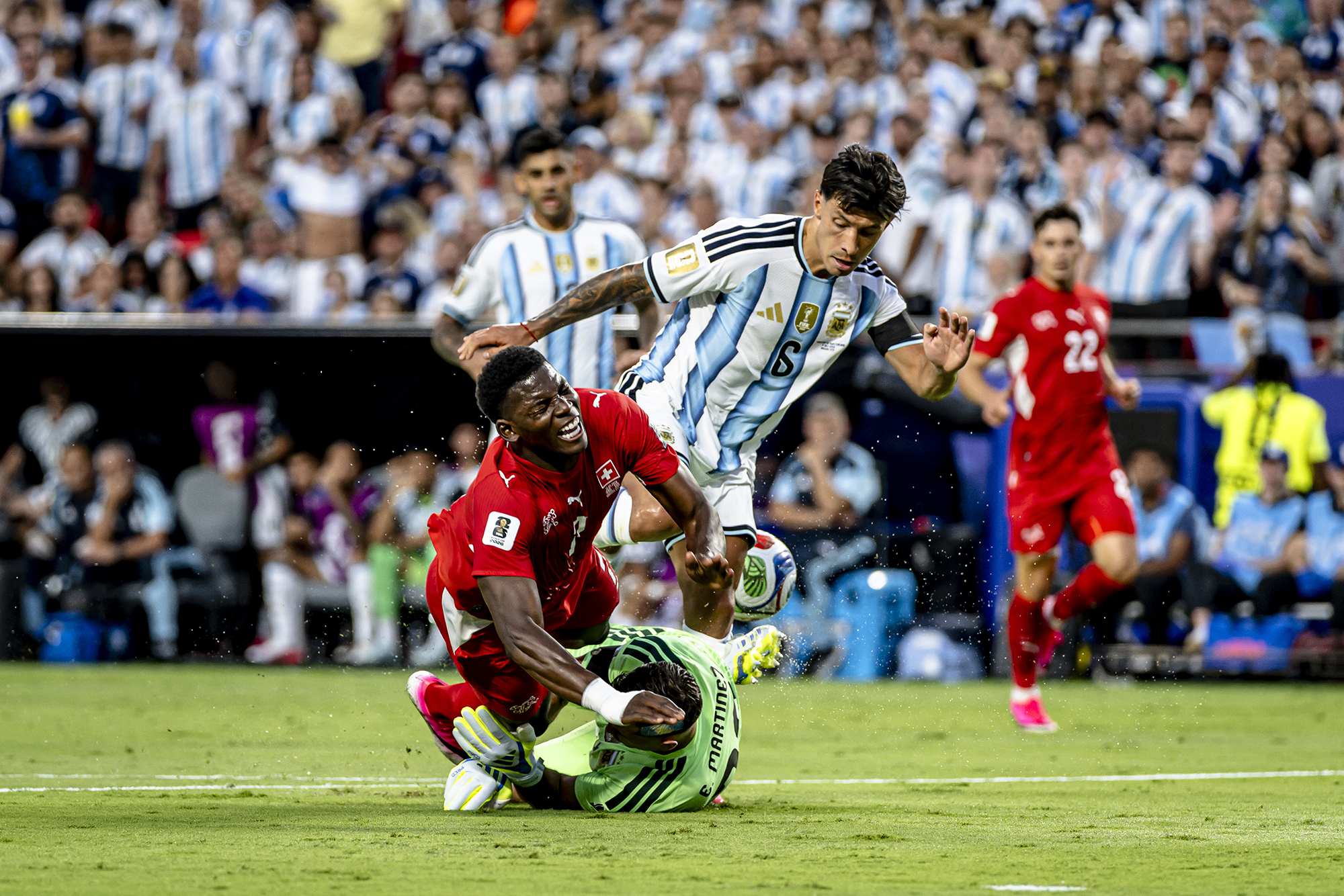 The controversial Embolo incident (Photo: Getty Images)
However, after reviewing the play with VAR, the referee completely reversed his decision. He withdrew Paredes' yellow card and instead booked Breel Embolo for simulation. Since it was Embolo's second yellow card of the match, Switzerland were forced to play the remainder of the game with 10 men.
The decision stunned Swiss head coach Murat Yakin, who did not attempt to hide his frustration after the final whistle. He insisted his team had every reason to feel they had been treated unfairly.
That said, questions can also be asked of Embolo himself. The Swiss forward appeared to exaggerate the contact despite already being on a yellow card. Whether the referee's decision was justified in the VAR era remains open to debate.
At this stage, it is difficult to determine how many of these incidents have been exaggerated by fans and the media, and how many truly represent serious officiating errors.
Regardless, the string of controversies has become an inseparable part of Argentina's journey through this tournament.
Now, however, Messi and his teammates face their toughest challenge yet. The semifinal against England should provide the clearest answer yet—and perhaps settle many of the questions surrounding Argentina's run at the 2026 World Cup.