Massive ballistic missile use: Ukrainian Air Force explains new Russian attack

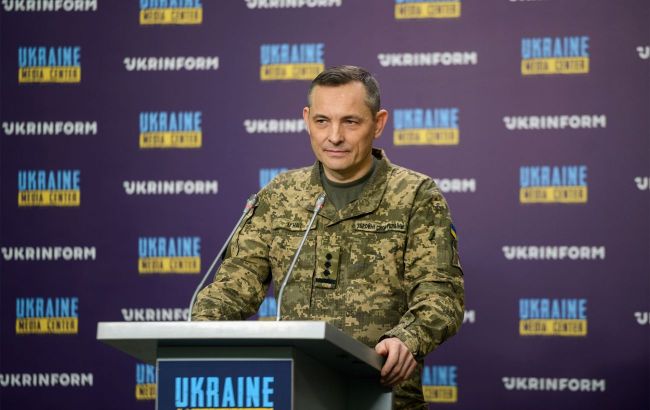 Yurii Ihnat (photo: Getty Images)
During another massive attack, Russia used an exceptionally large number of ballistic missiles, which significantly complicated air defense operations, said Yurii Ihnat, head of the communications department of the Ukrainian Air Force Command.
There were many ballistic missiles
According to him, data from strike locations is still being clarified, as "it is not easy to put all pieces together immediately after an attack."
"Very, very many ballistic missiles this time — we are talking about missiles flying on a ballistic trajectory. That is why out of more than 70 missiles, only 38 were shot down, but given the types of missiles, this is still a high figure," Ihnat stressed.
According to preliminary data:
- More than 70 missiles were used in total;
- 38 missiles were shot down;
- 28 were cruise missiles, of which 20 were destroyed;
- Information on six missiles is being уточified — they likely did not reach their targets.
Primary targets of the attack were critical infrastructure facilities, including energy sites in different regions of the country.
Geography of the strikes: Several regions at once
According to Ihnat, this time, Russia used a tactic of simultaneous strikes on many regions rather than concentrating on one direction.
The following regions were hit:
- Kharkiv region,
- Dnipropetrovsk region,
- Kyiv region,
- Odesa region,
- Vinnytsia region.
New focus in Russian missile strikes
As Ihnat noted, whereas Russia previously more often used Kh-101-type cruise missiles, the share of complex ballistic strike weapons is now increasing.
This time, the following was recorded:
- Kh-22 and Kh-32 missiles (at least seven launches),
- Zircon missiles,
- Likely Onyx missiles,
- As well as Iskander-M missiles.
All these missiles fly on ballistic or quasi-ballistic trajectories, which makes them particularly difficult to intercept.
Russia increases production of Shahed drones
According to Ihnat, Russia has significantly increased production of Shahed-type attack drones and uses them in large numbers during attacks.
"Russia has primarily ramped up production of Shahed-type attack unmanned aerial vehicles, and there are very many of them as well. To destroy them, we have to spend valuable munitions — both for short-range air defense and systems such as Gepard," he noted.
Due to the mass use of drones, the Air Force is forced to adapt its defense tactics. In particular, the creation of anti-aircraft drone units is being scaled up to more effectively counter enemy unmanned aerial vehicles.
He also confirmed that Russia actively uses Starlink to control drones, and the Ukrainian side has solutions to deprive the enemy of this advantage.
"There is a lot of information about Starlink — they use it, but there are certain solutions to deprive them of this," he stressed.
Attack on February 3
On the night of Tuesday, February 3, Russian forces once again carried out a massive attack on Ukrainian territory. According to preliminary information, the enemy used attack drones, ballistic and cruise missiles from strategic aviation, as well as Iskander and Zircon missiles.
The main targets of the attack were energy infrastructure facilities in Kyiv and the Kyiv region, Kharkiv, as well as other regions of the country.
Kharkiv Mayor Ihor Terekhov reported that the shelling of the city lasted more than three hours, resulting in damage to infrastructure.
In Kyiv, the enemy attack led to the destruction of residential buildings and outbreaks of fire. The number of injured increased to five people. A significant part of the left-bank area of the capital was left without heating, with the most difficult situation in Darnytskyi and Dniprovskyi districts.
In addition, as a result of the Russian strike in Kyiv, the Hall of Glory of the National Museum of the History of Ukraine in the Second World War, located at the foot of the Motherland Monument, was damaged. The site is a local landmark of science and technology.
President Volodymyr Zelenskyy stated that Russia carried out a targeted massive attack on Ukraine's energy infrastructure, using more than 70 missiles and 450 attack drones. Several regions and the capital were hit, with nine people reported injured and significant destruction.
More details on the consequences of the overnight attack are available in an RBC-Ukraine report.