Kremlin hands China control over Russian gas export insurance

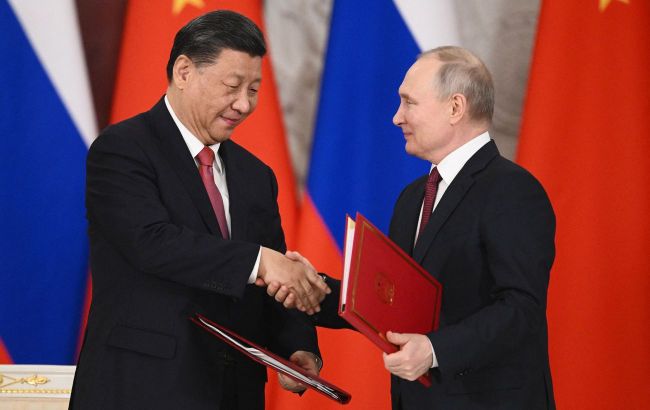 Photo: Chinese President Xi Jinping and Russian President Vladimir Putin
The Central Bank of Russia has sent a recommendation to major insurance companies to reinsure the risks associated with liquefied natural gas shipments to China through Chinese entities. In effect, Moscow is handing over to Beijing control over a key component of its own energy exports, according to the Foreign Intelligence Service of Ukraine.
Why Moscow went along with this
After 2022, Russian insurers will be cut off from the Western market. Their own capacity is insufficient, the sums involved are too large, and the logistics too complex. The only remaining option is Chinese companies.
What China gets
By joining the scheme, China gains significant leverage: whoever controls the insurance terms controls the logistics and the very possibility of deliveries. Formally, this is not ownership of assets, but in effect, it amounts to the same thing.
Imports of Russian LNG to China rose by 18.3% in 2025. In the first quarter of 2026, Russia supplied 1.4 million tons to China, 6.72% more than a year earlier. China has become the primary and, in effect, the only market for Russian liquefied natural gas.
Trap for Moscow
Chinese reinsurers will factor in sanctions, logistical, and political risks into their premium rates. Beijing is under no obligation to keep the terms unchanged, and at any moment can revise rates, narrow coverage, or impose new conditions in exchange for lower gas prices or concessions on other projects. Moscow will have no way to respond.
Purchasing power is plummeting in Russia. Russians are increasingly turning to so-called stores for the poor, the number of which has grown by a quarter over the past year. The reason is the difficult economic situation caused by the war and sanctions.
Russia’s budget deficit has exceeded the annual target and reached approximately $70 billion, nearly double the Ministry of Finance's previous estimates. Vladimir Putin recently summoned the country’s top economists and expressed his outrage that economic forecasts do not match actual performance.
He instructed the government to draw up a plan of measures to revive the economic situation, as Russia's GDP contracted by 1.8% in January–February.