Kremlin deliberately distorts Russia's economic data – Swedish intel

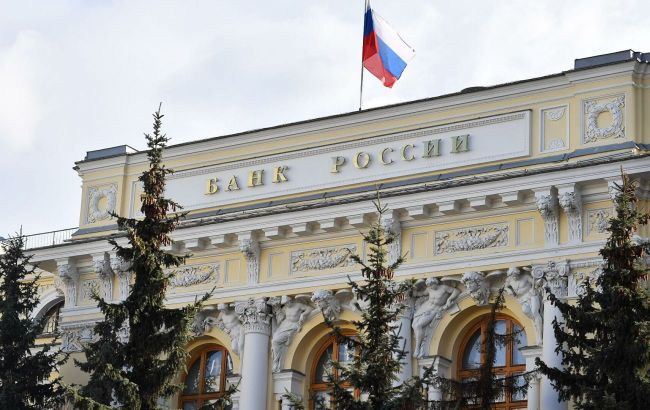 Photo: building of the Central Bank of Russia (cbr.ru)
Russia’s economy remains in crisis, even despite the sharp rise in global oil prices driven by the war in the Middle East, according to the Financial Times and comments from Swedish military intelligence chief Thomas Nilsson.
A “systemic problem” instead of sustainable growth
According to Nilsson, Russia would need Urals oil prices to stay above $100 per barrel for an entire year just to cover its budget deficit. Resolving other economic problems would take significantly longer.
“They still have a systemic problem. It’s not a sustainable growth model to produce material for the war that is then destroyed on the battlefield,” he said.
Economic problems have spread even to the defense sector, which until recently had been the main driver of growth. Outside of the drone industry, Russia’s military-industrial complex is loss-making, corrupt, and dependent on loans from state banks.
Data manipulation and the real picture
Swedish intelligence claims that Russia is systematically manipulating data to convince Western allies that its economy has withstood sanctions and wartime spending.
According to Stockholm’s assessment, Russia’s central bank is understating inflation: the official rate of 5.86% does not reflect reality, with the actual figure closer to the key interest rate of 15%. In addition, Sweden agrees with Germany’s BND intelligence estimate that Russia is understating its budget deficit by $30 billion.
President Vladimir Putin himself acknowledged that Russia’s GDP shrank by 1.8% in January–February, while Central Bank head Elvira Nabiullina noted a “near-constant deterioration in external conditions.”
Two scenarios: decline or shock
Nilsson believes Russia is “living on borrowed time.” There are only two possible scenarios: long-term decline or a sudden shock. In either case, the country is moving toward a financial crisis. At the same time, Putin’s strategic goals remain unchanged — he seeks control over Ukraine, including Odesa and possibly even Kyiv.
Sweden has long been preparing for potential threats in the region. In particular, the country is building two modern submarines — “Blekinge” and “Skåne,” which are expected to join the fleet in 2027–2028. They will patrol NATO’s eastern borders in the Baltic Sea.
At the same time, Stockholm continues to support Ukraine. In March 2026, Sweden allocated an additional €56 million to the Ukraine Energy Support Fund. The funds are intended for restoring damaged infrastructure and preparing for the next heating season.