Khamenei’s elimination alarms Kremlin. Putin’s security changed - FT

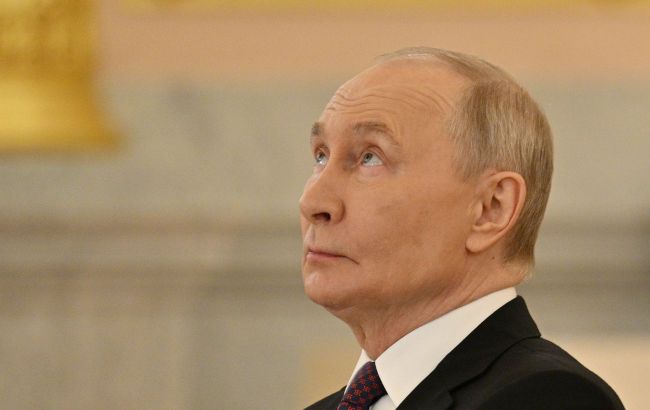 Photo: Russian President Vladimir Putin (Getty Images)
According to two sources cited by the outlet, after the death of Iran’s Supreme Leader Ali Khamenei, Russian intelligence services temporarily disabled part of a special video surveillance system used to protect Russian President Vladimir Putin and his closest associates.
According to one of them, the system — which is separate from nearly 300,000 cameras monitoring citizens in Moscow — was switched back on only after engineers thoroughly checked it, attempting to fully isolate it from the internet.
These measures were a response to an operation by Israeli intelligence, which, according to the outlet's sources, used a large volume of footage from Tehran’s traffic cameras to determine the location and timing of a meeting between Khamenei and his closest associates. During the strike, several senior Iranian security officials were killed.
As the FT notes, this operation demonstrated a new level of capability in modern surveillance systems. They are capable of analyzing vast amounts of video data, identifying behavioral patterns, tracking people’s movements, and quickly locating specific targets across thousands of cameras.
According to experts, modern algorithms are no longer limited to facial or license plate recognition. They allow users to search video footage using text descriptions, for example, finding people who hand over objects, change their appearance, or regularly appear in specific locations.
The report emphasizes that such capabilities are raising concerns among intelligence agencies in many countries. Surveillance networks designed for control and security can also become a valuable source of intelligence for adversaries.
That is why, after the events in Iran, the Kremlin decided to carry out additional checks on systems responsible for Putin’s security. According to the FT, Russian intelligence agencies fear that such technologies could be used to track the movements of senior officials and gather critical intelligence.
Earlier, the Financial Times reported that Israeli intelligence services had for years been obtaining data from Tehran’s traffic camera network.
Using video surveillance, intercepted communications, and big data analysis, intelligence was able to determine the whereabouts of Iran’s Supreme Leader Ali Khamenei and his entourage on the day of the strike.