Trap for Khamenei: How CIA source and traffic cameras led to Iran's leader

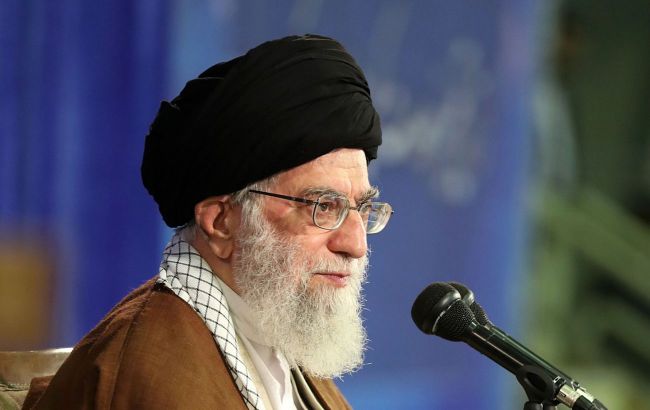 Photo: former Supreme Leader of Iran Ali Khamenei (Getty Images)
Israeli intelligence services had monitored nearly all traffic cameras in Tehran for years — and this helped determine the location of Iran’s Supreme Leader Ali Khamenei on the day of the strike, according to the Financial Times and two sources familiar with the operation.
Read also: US President issues statement to Iran after Khamenei's death
Footage from hacked cameras was encrypted and transmitted in real time to servers in Tel Aviv and southern Israel.
One camera had a particularly advantageous angle — it allowed surveillance of where security guards parked their personal vehicles and provided insight into the daily routine inside the heavily guarded compound.
How security “profiles” were built
Complex algorithms automatically compiled detailed profiles on each guard, including:
-
Home addresses
-
Work schedules
-
Routes to their duty station
-
Who they were protecting and transporting
Intelligence officials call this a “pattern of life” model. Traffic camera feeds were just one of hundreds of data sources that collectively helped determine exactly what time Khamenei would be in his office that Saturday morning — and who would be with him.
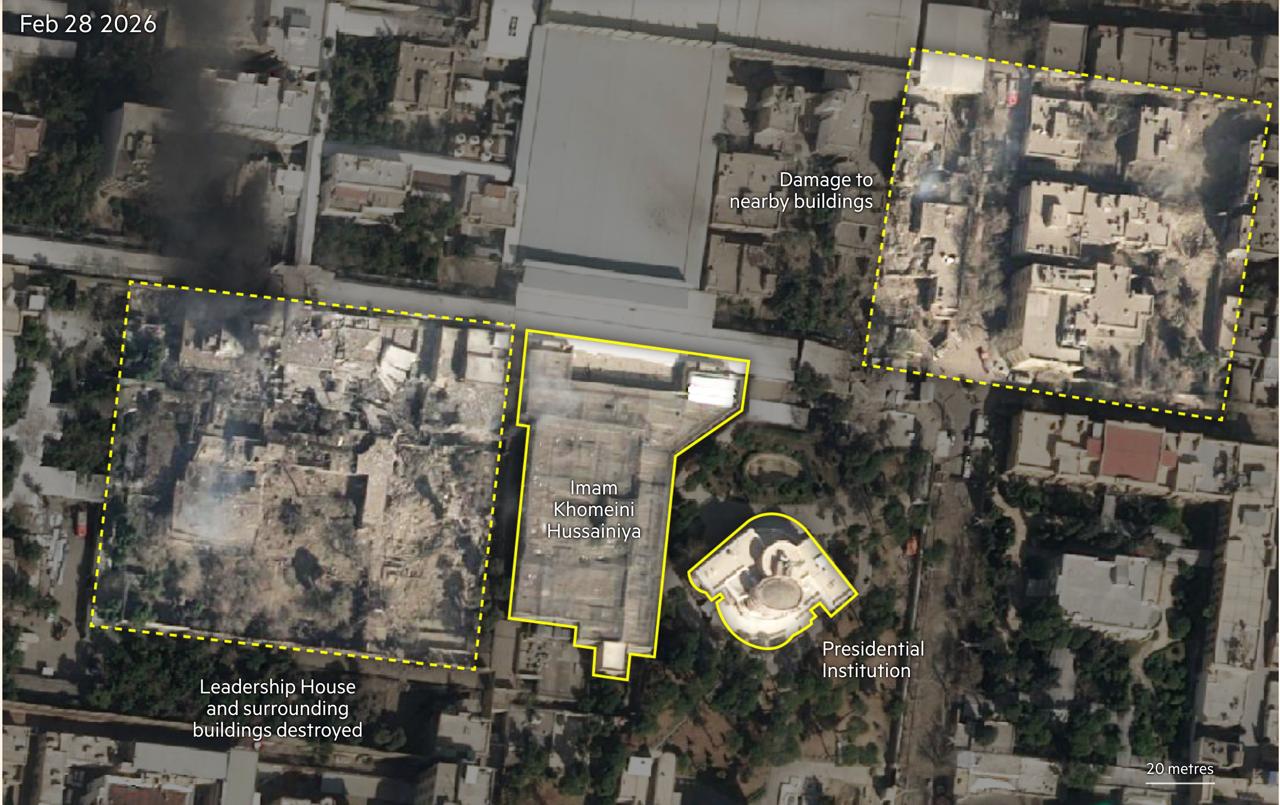
Photo: How the attack on Khamenei's residence was planned (Financial Times)
Why the guards’ phones failed
Israel also disrupted about a dozen mobile communication towers near Pasteur Street. Guards’ phones were effectively jammed during calls, preventing any warnings from reaching them.
"Long before the bombs fell, 'we knew Tehran like we know Jerusalem. And when you know [a place] as well as you know the street you grew up on, you notice a single thing that’s out of place," one Israeli intelligence officer said.
How social media analysis played a role
The intelligence gathering involved Israel’s signals intelligence Unit 8200, the Mossad foreign intelligence agency, and military analysts.
Israel applied social network analysis — a mathematical method capable of processing billions of data points to uncover hidden decision-making centers.
"If the decision maker decides that someone has to be assassinated, in Israel the culture is: 'We will provide the targeting intelligence,'"explained Itai Shapira, a brigadier general in Israel’s military reserves.
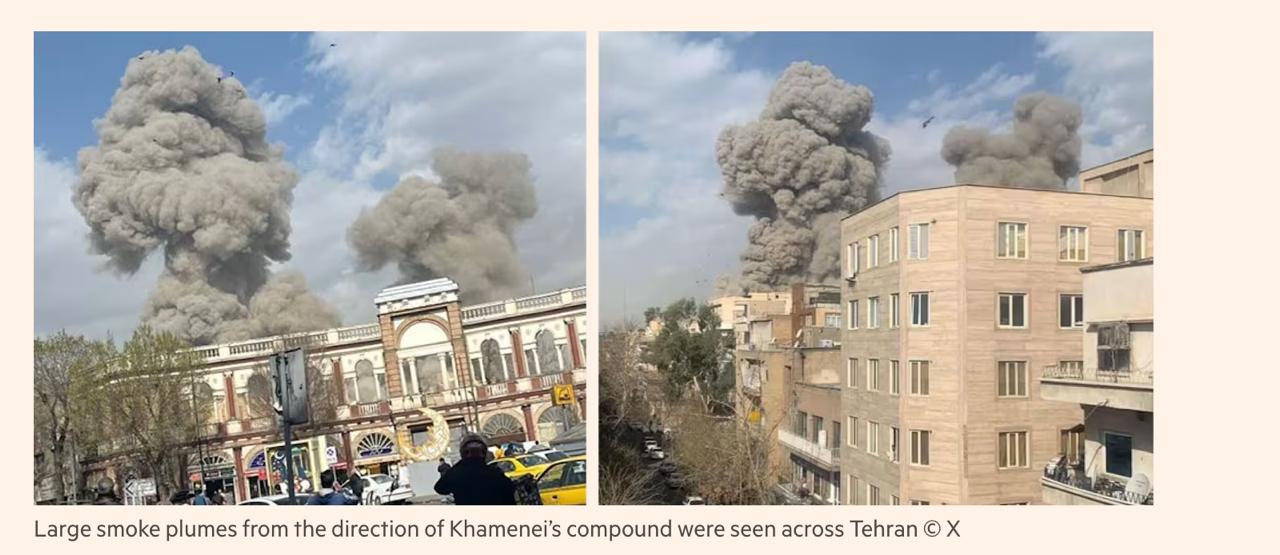
Photo: The aftermath of the strike on Khamenei's residence (Financial Times)
Khamenei was not hiding
Unlike Hezbollah leader Hassan Nasrallah, who spent years in underground bunkers, Khamenei had publicly spoken about the possibility of his own death and, according to Iranian experts, expected a martyr’s fate. During the war, however, he still followed certain precautions.
"He had two bunkers — and if he had been, Israel wouldn’t have been able to reach him with the bombs that they have," one source said.
A human source played a key role
Israeli intelligence confirmed that Khamenei and senior Iranian leadership would be at the residence that morning — based on hacked cameras and intercepted mobile data.
But the CIA also had a human source who directly confirmed the meeting.
Israeli aircraft reportedly fired up to 30 precision-guided munitions at Khamenei’s compound. A Sparrow-type missile was used, which Iranian air defenses cannot intercept. Striking in the morning rather than at night added an element of surprise.
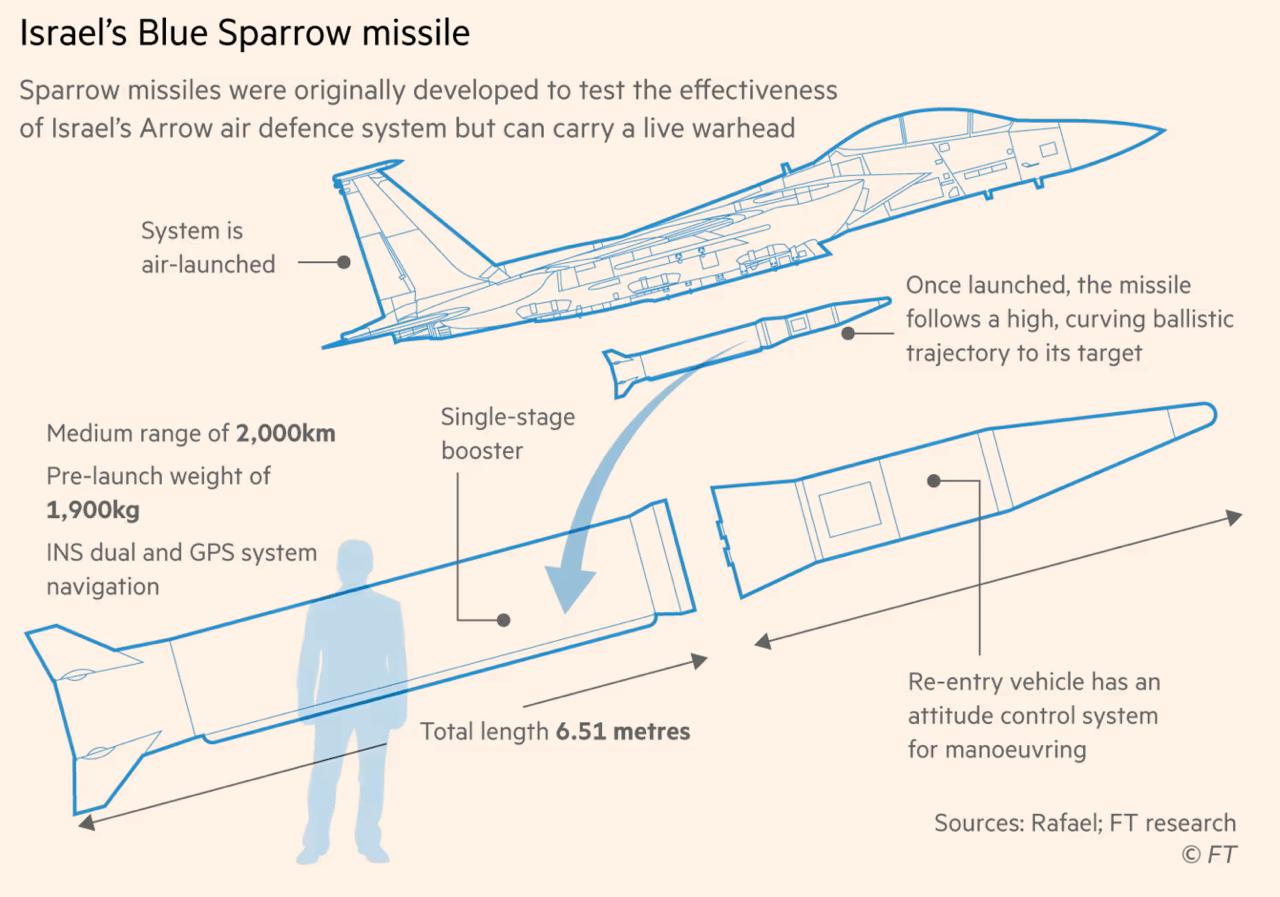
Photo: The missile that killed Khamenei (Financial Times).
What else is known about the operation
Shortly before the operation began, the CIA determined Khamenei’s location.
According to US media reports cited by RBC-Ukraine, President Donald Trump confirmed the death of Iran’s Supreme Leader, calling it the result of a joint US-Israeli operation.
In addition to Khamenei, at least 48 Iranian officials were killed. Israeli officials described it as the elimination of the entire “axis of terror.” Meanwhile, Trump said the operation was progressing faster than he had expected but did not rule out a potential US military invasion of Iran.