Israel hits Hezbollah amid ceasefire, IDF reveals reason

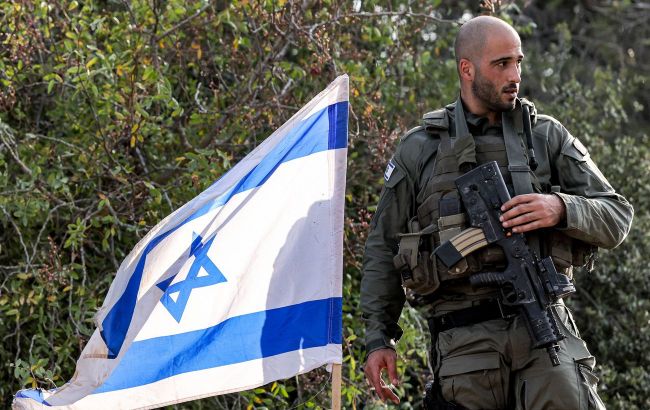 Israeli military (photo: Getty Images)
Israel continued attacks on Hezbollah facilities despite the announced ceasefire, which was reached with Lebanon on April 17, Kyiv time, according to the Israel Defense Forces (IDF).
The Israeli military carried out a series of airstrikes on Hezbollah targets in southern Lebanon.
"Earlier today, forces from the 401st Brigade detected a terrorist cell that violated the cease-fire agreements and approached the forces, posing an immediate threat during its activities in southern Lebanon..." the IDF reported, adding that to eliminate the threat, the terrorists were neutralized.
In addition, the Israel Defense Forces struck an underground shaft south of the forward defensive line where Hezbollah terrorists were detected entering.
"The IDF is authorized to take necessary measures for self-defense against threats, while ensuring the safety of the citizens of the State of Israel and forces deployed in the field. Actions taken in self-defense and to remove immediate threats are not restricted by the ceasefire," the IDF added.
What preceded this
On April 16, Israel and Lebanon, with US mediation, agreed to a 10-day ceasefire aimed at creating conditions for further negotiations.
At the same time, US officials explained that the ceasefire agreements do not necessarily mean a complete halt to strikes on Hezbollah, as Israel reserves the right to act against threats.
Against this backdrop, the situation in the region remains tense, and the ceasefire is fragile and could be broken at any moment.
Iran, US, Hezbollah, and Israel
After a two-week ceasefire between Iran and the United States was announced on April 7, Israel continued to carry out airstrikes against Hezbollah groups operating in Lebanon with Tehran's support.
Iran stated that such actions violate the agreements and jeopardize the fragile ceasefire with the US. However, Washington and Jerusalem argued that Lebanon was not covered by the agreement with Iran, calling Tehran's position a misunderstanding.
At the same time, according to media sources, Donald Trump's administration officials tried behind the scenes to convince Israel to halt its offensive, fearing it could derail diplomatic efforts with Iran.
In early March, Israel announced the start of an offensive campaign against Hezbollah in Lebanon. The decision was made after massive nighttime rocket and drone attacks by the Lebanese group.
The conflict between Iran-backed Hezbollah and Israel has spanned decades due to the struggle for influence in southern Lebanon. Tel Aviv views the group as a direct military threat.