Iran’s economy relies on crypto: WSJ finds most popular coin

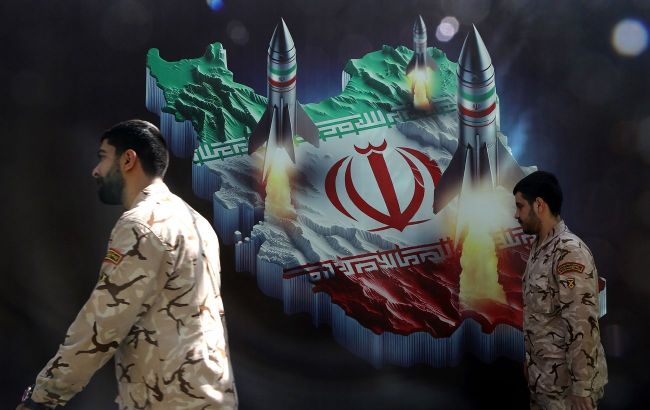 Iranian military (Photo: Getty Images)
Iran's desire to receive payment for the passage of oil tankers exclusively in cryptocurrency looks entirely logical, as Tehran thus constantly circumvents banking sanctions. All crypto accounts are strictly controlled by the IRGC (Islamic Revolutionary Guard Corps), and ordinary Iranians also actively use crypto wallets, according to an investigation by The Wall Street Journal.
Read also: Trump demands Iran stop charging ships in Strait of Hormuz
Iranian authorities have officially confirmed their intention to collect tolls from oil tankers solely in digital currency. This decision has lifted the veil on the country's shadow crypto economy, whose volume has already reached $7.8 billion.
Tehran has set a clear tariff for passage through the Strait of Hormuz. Each tanker must pay the equivalent of $1 in cryptocurrency for every barrel of oil on board. The use of cryptocurrency itself allows the regime to avoid financial monitoring. The money cannot be traced or confiscated.
Spokesperson for Iran's Oil, Gas and Petrochemical Products Exporters Union, Hamid Hosseini, confirmed these intentions. According to him, Iran wants to receive payments in cryptocurrency to ensure that they cannot be traced or confiscated due to sanctions.
State in a smartphone: How the IRGC uses crypto accounts
Iran's crypto ecosystem has grown rapidly amid international isolation. A key player in this market is the Islamic Revolutionary Guard Corps (IRGC), which controls more than half of the country's total crypto activity. They use state energy resources to mine bitcoins. Digital money is used to purchase weapons and goods in violation of sanctions.
Chainalysis senior intelligence analyst Caitlin Martin said that in any heavily sanctioned jurisdiction, cryptocurrency is useful. She added that conducting cross-border transactions and settlements is very easy and fast. She also noted that it is relatively easy to access, given the dynamic crypto environment in Iran.
Lifeline for ordinary Iranians
Cryptocurrency has become an escape not only for the authorities. Ordinary citizens are saving their savings from hyperinflation. The national currency, the rial, continues its rapid decline.
Iranians are buying Tether in large numbers, a stablecoin pegged to the dollar. This is reminiscent of the situation in Venezuela, where digital assets also serve as an alternative to devalued money.
The largest local exchange, Nobitex, has over 11 million users. During airstrikes at the end of February, people panicked and withdrew funds. Within minutes, outflows from the exchange exceeded $10 million.
Technical dead end for carriers
Despite Tehran's determination, shipping companies have found themselves in a difficult position. Buying and transferring large batches of tokens in a short time is nearly impossible. This creates huge operational obstacles.
In addition, tanker owners are nervous about the risks of securely storing digital assets. Legal hurdles for official carriers also affect settlements.
US fight against Tehran's crypto infrastructure
Washington is trying to shut down these channels. American regulators have already attacked Iran's digital network. Two British exchanges, Zedcex and Zedxion, have been sanctioned.
These platforms enabled the IRGC to conduct transactions totaling about $1 billion. The US Treasury Department promises to intensify pressure, and the White House views crypto payments for oil as a direct challenge to dollar dominance.
Latest news on events in Iran
Greek and UN officials have become outraged over Trump's desire to split the proceeds from oil tanker passage fees through the Strait of Hormuz between the US and Iran. No existing agreement allows for the imposition of such duties, Greece and the UN stated.
At the same time, German Chancellor Friedrich Merz has agreed to support a mission to ensure shipping security in the Strait of Hormuz. However, Germany wants a corresponding UN mandate for such an operation.
Meanwhile, Kuwait has stated that it is repelling attacks by hostile drones. A ministry spokesperson has already stated that the drone attacks were aimed at some vital facilities.