Tehran opens Strait of Hormuz to shipping, but there's a catch

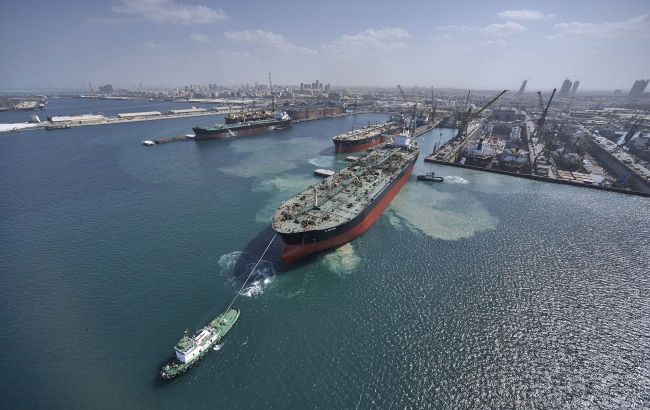 Illustrative photo: Iran does not allow any foreign vessel to pass through the strait without conditions (Getty Images)
Although Iran has officially announced the reopening of the Strait of Hormuz for civilian vessels as part of a ceasefire, free navigation remains conditional due to certain caveats, The Epoch Times reports.
Despite claims that the strait has been unblocked, Tehran has effectively turned it into a controlled corridor. According to a statement by Iranian Deputy Foreign Minister Saeed Khatibzadeh, any vessel, including American ones, must contact Iranian authorities to obtain permission.
Without such approval, safety is not guaranteed, allegedly due to mines laid during the conflict. On maps published by some Iranian institutions, the strait is marked as mined. Vessels are offered two alternative corridors, one of which (north of Larak Island) has already been called the "tollbooth" lane, where Iran demands payment for passage.
Tehran has introduced a so-called safe escort fee, which can reach up to $2 million per supertanker (VLCC).
ADNOC chief Sultan Al Jaber said that a conditional passage is not a passage - it is control under another name.
As of April 9, only 3–8 vessels per day are passing through the strait — less than 10% of pre-war levels (around 60 vessels daily). Most of them are Iranian ships, tankers, or bulk carriers.
Against this backdrop, after a brief 13% drop on Wednesday, Brent crude prices have started rising again, approaching $99–100 per barrel. Iran’s restrictions are making logistics unpredictable, while more than 800 civilian vessels remain stranded in the Persian Gulf awaiting safe passage guarantees.
Ceasefire and the Strait of Hormuz
On the night of April 8, US President Donald Trump announced a two-week ceasefire with Iran. One of the conditions was the full reopening of the Strait of Hormuz.
Iran initially agreed, but the following day, after Israeli strikes on Lebanon, it completely halted shipping through the strait.
On April 8, Iran also stated it would require payment in cryptocurrency for oil tankers passing through the Strait of Hormuz during the temporary ceasefire with the United States.
Following this, the Trump administration confirmed that the United States opposes any fees imposed by Tehran on oil vessels transiting near Iran’s shores. US Vice President JD Vance also stated that Washington and Israel had not committed to a ceasefire in Lebanon as part of the arrangements with Iran.