Iran blocking Starlink on large scale for first time. Trump wants to find solution with Musk

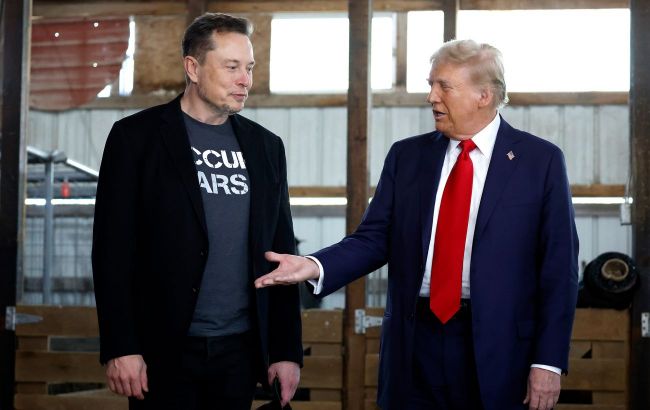 Photo: Donald Trump and Elon Musk (Getty Images)
Iranian authorities have attempted for the first time to carry out a large-scale jamming of Starlink, blocking about 80% of its traffic. US President Donald Trump said he would discuss ways to support access to the network in the country with Elon Musk, CNN reports.
Large-scale attack on satellite communications
According to monitoring data, Iranian security services used new electronic warfare tools to suppress the Starlink signal. The network had remained a Plan B for protesters during regular shutdowns of mobile communications and fixed internet in the country.
Due to the large-scale interference with the system, disruptions affecting about 80% of Starlink traffic in Iran were recorded.
This was the first documented attempt by Tehran to neutralize SpaceX’s satellite technology on such a large scale.
US intervention and Trump’s stance
Amid the blocking, US President Donald Trump said he intends to hold talks with Elon Musk. The goal of the meeting is to find a technical solution to ensure uninterrupted internet access in Iran despite the efforts of the local authorities.
At the same time, official Tehran has issued an ultimatum, demanding that Musk officially register Starlink in the country and obtain an operating license.
If he refuses, the authorities have threatened to introduce criminal liability for possessing Starlink terminals and to completely block the service at the national level.
Reporter: Are you going to send Starlink to Iran?
— Clash Report (@clashreport) January 12, 2026
Trump: We’re going to be talking about that. We may get the internet going if that’s possible.
We may speak to Elon Musk, and in fact, I’m going to call him as soon as I’m finished with you. pic.twitter.com/MV3k3N35IT
Options being considered by the White House
The Donald Trump administration is developing a plan to support Iranian demonstrators, combining both technological and economic pressure. A key focus is ensuring uninterrupted internet access via Starlink to facilitate the coordination of protests.
Additionally, the White House is considering the possibility of imposing further sanctions on security forces responsible for suppressing the demonstrations and providing financial support to opposition groups.
What sparked the protests in Iran
The mass demonstrations were triggered by a rapid economic collapse and the sharp fall of the national currency, the rial. Critical inflation made basic food products unaffordable for most of the population, bringing not only political activists but also ordinary merchants onto the streets.
The protests quickly shifted from economic demands to political ones, with slogans against the current regime of Ayatollah Ali Khamenei.
Iran unofficially supports Russia in its war against Ukraine. Despite Tehran’s official denials, military cooperation between the two countries has significantly intensified since the start of Russia’s full-scale invasion of Ukraine.
According to Western intelligence and media reports, Tehran has begun supplying short-range ballistic missiles for the needs of the Russian military. Even some members of Iran’s parliament have confirmed this information domestically.
The US and the European Union have repeatedly imposed sanctions on Iran’s defense industry for supporting the aggression. The US State Department emphasizes that such cooperation threatens not only Europe’s security but also stability in the Middle East.