Iran attacks US allies just hours after ceasefire

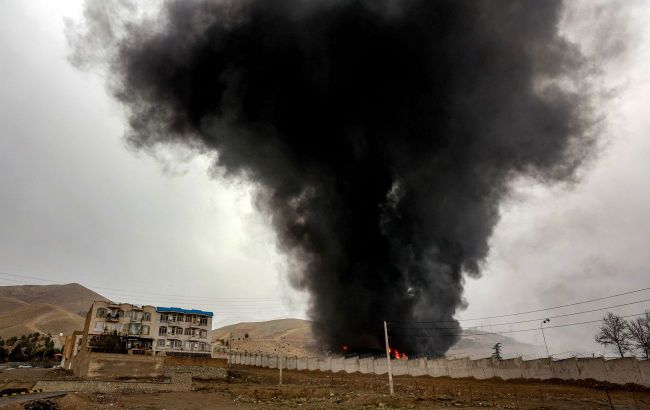 Photo: Iran carried out attacks on Gulf countries after the ceasefire (Getty Images)
Several Gulf countries were hit by missile strikes and drone attacks from Iran just hours after the announcement of a two-week ceasefire between Tehran and Washington, according to Al Jazeera, the Financial Times, and a statement by Pakistan’s Prime Minister Shehbaz Sharif.
Impact of the attacks in the region
According to media reports, the UAE, Kuwait, Bahrain, and Saudi Arabia all reported strikes on their territory. In the United Arab Emirates, air defense systems intercepted ballistic and cruise missiles.
Falling debris sparked a fire at the Habshan gas complex in Abu Dhabi, forcing a temporary shutdown of operations. Three people were injured in the incident.
In Kuwait, strikes hit oil facilities and power plants, causing serious damage to infrastructure. The country’s military said it intercepted 28 drones.
In Bahrain, falling debris damaged homes in the Sitra area and injured two civilians.
Strike on a strategic pipeline
Sources say a pumping station on Saudi Arabia’s East-West oil pipeline was targeted. The pipeline is critical for the kingdom, as it allows oil exports to bypass the blocked Strait of Hormuz.
Preliminary reports indicate the strike was carried out by a drone.
Iranian state television confirmed the operations, describing them as a response to the bombing of Iranian oil facilities. Meanwhile, Pakistan, where talks are expected to take place, has called on all sides to show restraint.
"I earnestly and sincerely urge all parties to exercise restraint and respect the ceasefire for two weeks, as agreed upon, so that diplomacy can take a lead role towards peaceful settlement of the conflict," said Pakistan’s Prime Minister Shehbaz Sharif.
Experts suggest the attacks may be the result of a decentralization of Iran’s military command.
Ceasefire violations may simply be due to "a loose chain" in communication within parts of the country’s military command, said correspondent Malik Traina.
"The hope is that there’s a diplomatic path," he added.
What preceded the ceasefire and the attacks
On April 7, the United States and Iran announced a two-week ceasefire aimed at working toward a full peace agreement after a prolonged conflict.
US Defense Secretary Pete Hegseth said Tehran was forced into the move after Washington identified military targets on Kharg Island that Iran could not defend.
At the same time, the United States warned it does not rule out a resumption of hostilities and new strikes if the terms of the ceasefire are violated.
Meanwhile, Israel continues the active phase of Operation Roaring Lion. Recently, it carried out its largest attack on Hezbollah targets in Lebanon, destroying militant headquarters in civilian areas within minutes.
Against this backdrop, Tehran has already threatened to withdraw from the ceasefire agreement. Iranian officials described the strikes on Lebanon as a direct violation of the deal and said they would not observe the ceasefire if Israeli attacks continue.