Indian rupee hits historic low amid Russia's war against Ukraine

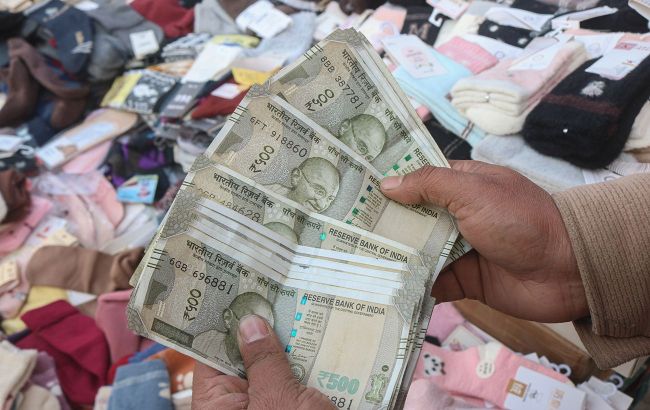 Illustrative photo: Indian rupee (Getty Images)
The Indian rupee fell to a record low of over 90 per dollar amid the fallout from Russia's war against Ukraine, according to Bloomberg.
Against the backdrop of the worsening economic consequences of Russia's war against Ukraine, as well as the delay in signing an important trade agreement with the US, the Indian rupee has hit another low.
Analysts note that the situation is complicated by the lack of active intervention by the Indian central bank, which has done little to stem the fall in the exchange rate in recent weeks. Additional pressure is being created by the outflow of foreign capital from Indian stocks, which further reduces demand for the rupee.
Economists warn that this trend could increase the cost of imported goods, affect inflation, and reduce the purchasing power of the population.
At the same time, the Indian government is working on measures to stabilize the rupee, including possible currency interventions and encouraging foreign investors to remain in the market. Experts advise businesses and individuals to closely monitor exchange rate fluctuations and plan their spending in line with the current situation.
Despite temporary difficulties, economists believe that long-term stabilization is possible if global trade issues are resolved and foreign economic relations normalize.
Rupee exchange rate in 2025
In 2025, the rupee proved to be one of the weakest currencies in Asia. Analysts cite several key reasons for this decline.
For example, investors are leaving Indian markets, which reduces demand for the national currency and contributes to its depreciation.
In addition, India has suffered economic and trade losses due to its cooperation with Russia, especially in the context of Russia's war against Ukraine and sanctions pressure from the US and the EU.
Thus, due to India's close relations with Russia, Washington raised tariffs on most Indian goods to 50% in 2025, including additional tariffs related to purchases of Russian energy and weapons.
However, on November 10, US President Donald Trump announced that he would lower import tariffs on Indian goods in connection with India's reduction in purchases of Russian oil.
Previously, India hardly purchased Russian oil, preferring supplies from the Middle East. However, everything changed after Russia's full-scale invasion of Ukraine and the introduction of a price cap of $60 per barrel by the G7 countries.