Human evolution may be rewritten? Scientists challenge everything we know about Homo

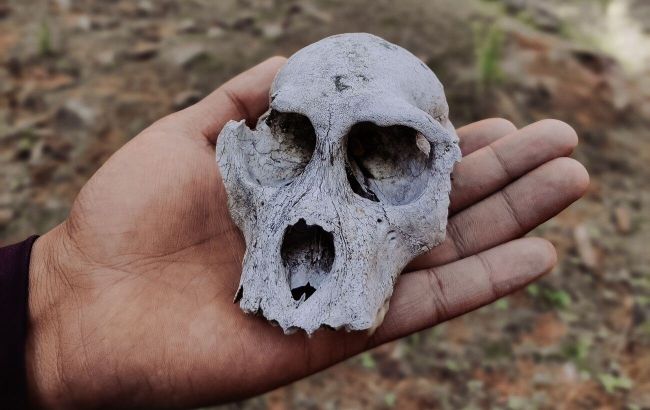 Scientists propose grouping human ancestors together (photo: Pexels)
Scientists at Monash University propose radically changing the classification of human ancestors and including all species from the past 4–5 million years in the genus Homo, according to a new study published in the American Journal of Biological Anthropology.
Why do the old boundaries of human evolution no longer work?
Traditional science portrayed human evolution as a clear sequence of species: from ape-like ancestors through australopithecines to Homo sapiens. However, new fossil discoveries and genetic analyses show that the boundaries between these groups have effectively disappeared.
Researcher Dr. Ian Towle notes that the accumulated evidence makes the current taxonomy ineffective. This applies to species classified as Homo, as well as Australopithecus and Paranthropus, which lived over the past 5 million years.
The collapse of traditional criteria for Homo
Previously, researchers identified members of the genus Homo based on specific characteristics, but modern discoveries have overturned these rules.
A large brain is no longer considered a mandatory criterion, as some recognized Homo species had very small brain volumes.
Scientists also found complex tool use and sophisticated behavior among members of Paranthropus and Australopithecus.
Anatomical and ecological differences that were previously considered fundamental have turned out to be blurred.
What would expanding the genus Homo change?
Modern taxonomy seeks to group species according to common ancestry. Anthropologists believe that bringing Australopithecus and Paranthropus under the single name Homo would create a more stable system.
This would spare scientists from constantly redrawing the boundaries of the human lineage whenever new fossil remains are discovered and would make it possible to describe in greater detail the complex, nonlinear path of development of the human species as a whole.
Why do the old boundaries of human evolution no longer work?
Traditional science portrayed human evolution as a clear sequence of species: from ape-like ancestors through australopithecines to Homo sapiens. However, new fossil discoveries and genetic analyses show that the boundaries between these groups have effectively disappeared.
Researcher Dr. Ian Towle notes that the accumulated evidence makes the current taxonomy ineffective. This applies to species classified as Homo, as well as Australopithecus and Paranthropus, which lived over the past 5 million years.
The collapse of traditional criteria for Homo
Previously, researchers identified members of the genus Homo based on specific characteristics, but modern discoveries have overturned these rules.
A large brain is no longer considered a mandatory criterion, as some recognized Homo species had very small brain volumes.
Scientists also found complex tool use and sophisticated behavior among members of Paranthropus and Australopithecus.
Anatomical and ecological differences that were previously considered fundamental have turned out to be blurred.
What would expanding the genus Homo change?
Modern taxonomy seeks to group species according to common ancestry. Anthropologists believe that bringing Australopithecus and Paranthropus under the single name Homo would create a more stable system.
This would spare scientists from constantly redrawing the boundaries of the human lineage whenever new fossil remains are discovered and would make it possible to describe in greater detail the complex, nonlinear path of development of the human species as a whole.