Seven human species once lived on Earth: Why only we survived?

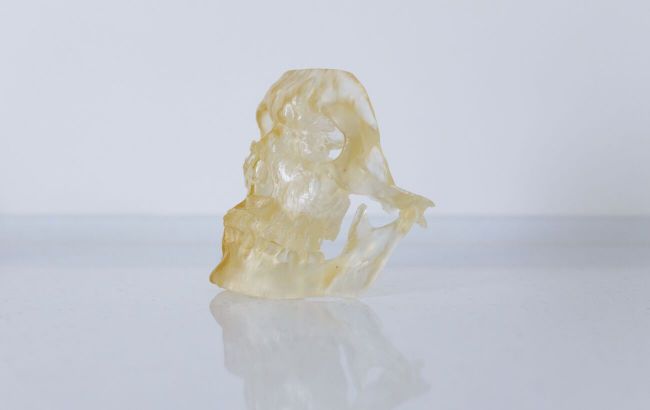 Neanderthals did not go completely extinct (Photo: Pexels)
Modern society is not the only human species that has ever existed on Earth. As recently as 300,000 years ago, our planet was home to at least seven different members of the Homo genus at the same time, according to British scientist Chris Stringer.
Which human species shared the planet with our ancestors?
When Homo sapiens first appeared in Africa, the world was already populated by other members of the Homo genus. Most of them had unique adaptations that helped them survive in their environments.
At that time, Earth was inhabited by:
- Neanderthals, who lived across Europe and parts of Asia
- Denisovans, who inhabited regions of Asia
- Homo erectus and Homo heidelbergensis, earlier human species
- Homo naledi, a species with a relatively small brain
- Homo floresiensis, a dwarf species from the Indonesian island of Flores, often referred to as the "hobbits"
The mass migration of our ancestors out of Africa, which began around 60,000 years ago, coincided with the gradual disappearance of all the other human species.
Were Homo sapiens responsible for the extinction of other human species?
For many years, scientists believed that our ancestors physically wiped out or completely displaced their competitors thanks to their evolutionary advantages. However, Professor Chris Stringer, head of human evolution research at London's Natural History Museum, says the reality is far more complex.
Neanderthals were a highly advanced and resilient species. By the time Homo sapiens arrived, they were already suffering from climate change, which had weakened their populations.
Our ancestors may simply have accelerated their decline by competing more successfully for limited resources.
As for the disappearance of Denisovans, Homo floresiensis and Homo erectus, scientists still lack enough fossil evidence and DNA samples to draw firm conclusions.
Neanderthals still live on in our DNA
Professor Stringer emphasizes that Neanderthals and Denisovans cannot be considered completely extinct. For thousands of years, Homo sapiens not only coexisted with them but also interbred with them.
As a result, traces of their genomes remain in modern humans today.
If all the surviving Neanderthal DNA fragments found in people around the world were combined, scientists could reconstruct around 40% of the Neanderthal genome, even without relying on fossil remains.