Scientists prove ancient human species passed its DNA to modern people

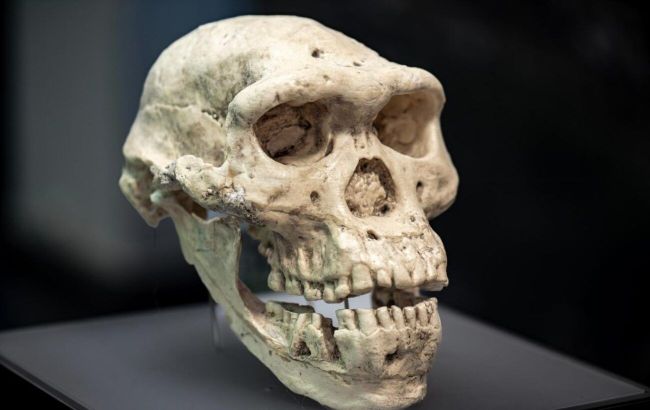 Homo erectus passed on part of its genetic legacy (Photo: Nature)
The long-standing view of human evolution as a branching tree may be wrong. A new study suggests that different ancient human species not only coexisted but also interbred extensively, according to a study published in the journal Nature.
Ancient proteins reveal what DNA no longer can
Because DNA in fossil remains older than about 100,000 years is usually too degraded to analyze, researchers turned to a technique known as paleoproteomics.
Paleoproteomics is a branch of molecular biology and paleontology that studies ancient proteins preserved in fossils, bones, teeth, or skull fragments. Since proteins survive much longer than DNA, they can help scientists reconstruct the evolution, diet, and diseases of extinct organisms.
The researchers extracted ancient proteins from the enamel of six Homo erectus teeth discovered at three archaeological sites in China: Zhoukoudian (where the famous "Peking Man" fossils were found), Hexian, and Sunjiadong. The specimens are approximately 400,000 years old.
The team explained that tooth enamel is the hardest tissue in the human body, allowing proteins to survive far longer than genetic material.
The study found that:
- All six samples contained a unique amino acid variation confirming they belonged to an East Asian Homo erectus population.
- A second protein variation was found to be shared by both Homo erectus and Denisovans, the mysterious group of archaic humans.
- The same protein marker is still found in modern populations, appearing in up to 21% of people in the Philippines and about 1% of people in India.
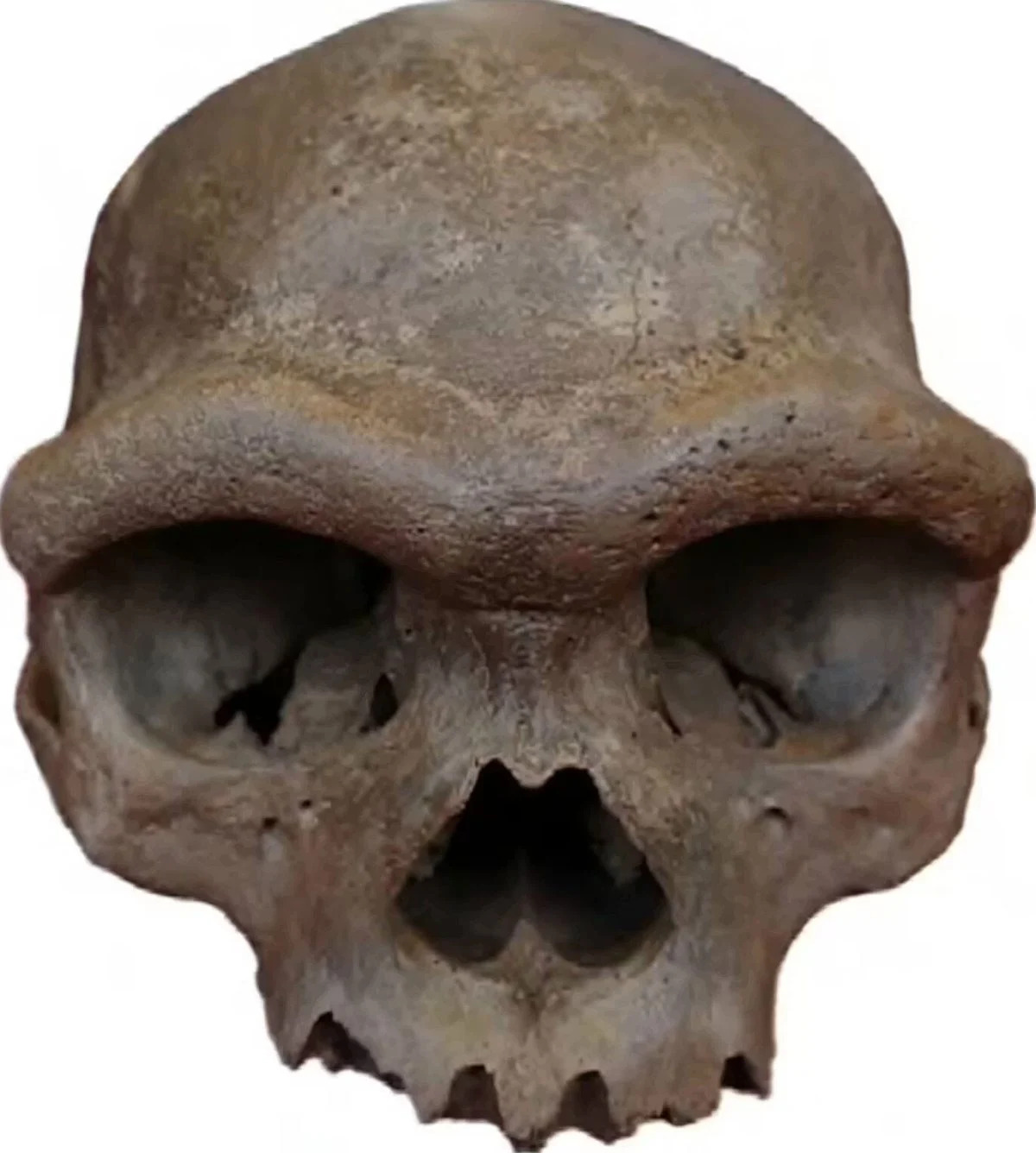
The Harbin skull, discovered in northeastern China, was recently identified as a likely Denisovan skull (Photo: Nature)
How was this genetic legacy passed on?
The most likely scenario involves a gradual process known as introgression—the transfer of genetic material from one species to another through interbreeding.
According to the researchers, East Asian Homo erectus populations passed this genetic variant to the Denisovans during repeated episodes of interbreeding. Denisovans later transmitted it to the ancestors of present-day people living in Southeast Asia and Oceania.
This finding suggests that Homo erectus was not an evolutionary dead end. Instead, tiny molecular traces directly connect the fossil teeth of Peking Man to the DNA of people living today.
What this means for human evolution
The researchers argue that interbreeding between ancient human species was common rather than exceptional.
Today, people living outside Africa carry about 2% Neanderthal DNA, while Papuans and Indigenous Australians possess an additional 2% to 5% Denisovan ancestry.
As a result, many scientists are moving away from describing human evolution as a branching "tree." Instead, they suggest it is more accurately represented as a river with many channels—constantly splitting apart, rejoining, and exchanging genetic material along the way.