Housing crisis in Russia: Every tenth building unsafe as funds shift to war in Ukraine

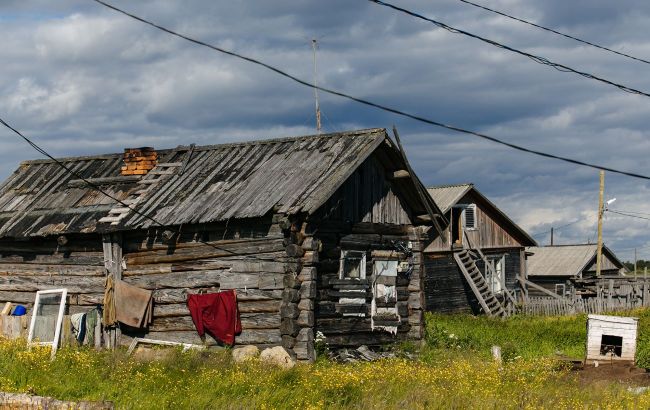 Russia records a record number of worn-out and unsafe residential buildings (photo: Getty Images)
The scale of housing degradation in the aggressor country has become systemic: one quarter of apartment buildings require major repairs, while state programs have effectively been curtailed, according to data from the Foreign Intelligence Service.
Currently, about 239,000 buildings in Russia are in poor condition, with more than 40% of them unsafe for operation. Another 9.3% of the housing stock (around 88,000 buildings) has been officially classified as old or unsafe, posing a direct risk of collapse.
Arctic regions are under threat, and a trillion-ruble shortfall
The most critical situation is observed in northern regions, where the state has effectively left residents to fend for themselves. In particular:
- Yakutia: problematic housing reaches 46%;
- Arkhangelsk region: 31% of the housing stock is destroyed;
- Komi and Yamal: the share of unsafe housing stands at around 30%.
At least 2 trillion rubles are needed to address the problem, but only 160 billion rubles have been allocated in the budget for these purposes. Due to the priority given to military spending, the federal resettlement program has been suspended, and its implementation has completely failed in 12 regions.
Residents to be forced to pay for ruins
Instead of assisting citizens, Russia's Ministry of Construction, Housing and Utilities proposed in late 2025 to postpone the resettlement program until September 2028. Authorities plan to revise safety criteria to classify dangerous buildings as "fit for use" and to shift the financial burden onto residents.
The crisis is also deepening in the primary housing market. Following the cancellation of subsidized mortgages, sales have fallen by 26%, and the launch of new projects has decreased by 12%. Developers are widely delaying project completion, highlighting the overall decline of the construction sector amid rising tax pressure and expensive loans.
According to Ukrainian intelligence, Russian regions have been engulfed in a deep financial crisis due to the reorientation of Russia's budget toward the war against Ukraine.
The worst situation is observed in coal-mining and metallurgical regions, where budget deficits reach tens of billions of rubles. Due to reduced federal subsidies and the loss of external markets, local authorities are no longer able to meet even basic social obligations to citizens.
Since the start of the full-scale invasion in 2022, direct spending on military aggression against Ukraine has cost Russian taxpayers a staggering $550 billion.
The Kremlin has effectively shifted the financial burden of the war onto its own population, diverting resources away from social programs, healthcare, and infrastructure projects.