Germany developing missile detection system due to threat of Oreshnik strikes

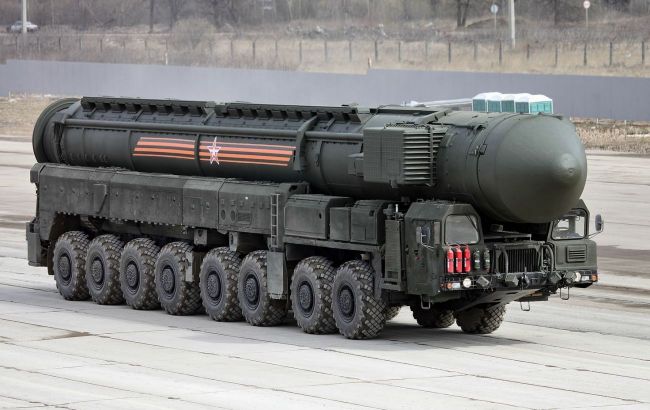 Illustrative photo: Oreshnik missile (Russian media)
Germany is the first in the EU to develop its own missile detection system to reduce dependence on the US in defense matters, as well as in response to the threat of strikes from Russia’s Oreshnik system, according to the Financial Times.
The head of the country’s Space Command, Michael Traut, stated that Germany plans to establish the foundation for a satellite-based missile detection system. He noted that this is a national project, but Berlin is open to cooperation with European allies.
Reducing dependence on the US
Currently, the EU relies on the US-provided space-based early warning system via NATO to detect long-range missiles. However, the unpredictability of former US President Donald Trump alarmed European countries and prompted them to reassess their own military capabilities.
Traut emphasized that Europe had relied on the US for all aspects of space capabilities and that there was an urgent need to develop certain German and European sovereign capabilities in missile detection and interception. There is a need of not only to be able to detect missiles but also to counter them at an early stage.
Impact of the Oreshnik
In addition, the vulnerability the EU faces in detecting missile launches has been highlighted by Russia’s strikes with the Oreshnik missile on Ukraine.
Russia has already carried out two strikes using this ballistic missile, raising concern across Europe.
The outlet notes that Traut declined to provide details regarding the project’s timelines or budget but emphasized that Europe cannot afford to delay.
Oreshnik strike on Ukraine
The Ukraine-NATO Council recently held an extraordinary meeting in Brussels due to massive strikes by the aggressor country, including the use of the Oreshnik missile.
Ukraine’s Deputy Defense Minister Serhii Boiev emphasized that the Oreshnik strike near a NATO country’s border is a manifestation of Russia’s aggressive policy and its unwillingness to end the war.
On the night of January 9, Russian forces struck the Lviv region with a medium-range ballistic missile, the Oreshnik.
Later, the SBU displayed fragments of the Oreshnik. These pieces will serve as material evidence and will be sent for examination.